Get Full Government Meeting Transcripts, Videos, & Alerts Forever!
Get email alerts on the Streets topic
No spam. Unsubscribe anytime.
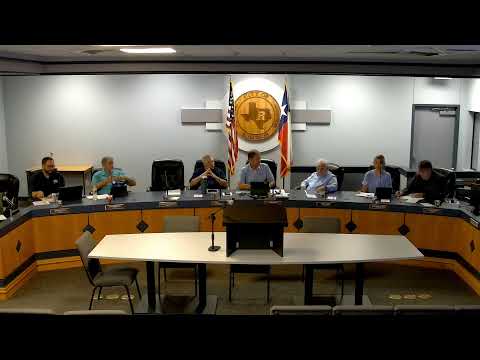
Council pauses private-street takeover discussion after homeowner board asks for neighborhood vote
Summary
After staff estimated $4,500 for core testing across Huntington/Estate phases, the council agreed to pause formal action on city takeover and asked neighborhood leaders to survey property owners before further council consideration.
The City Council discussed the question of whether the city should accept private streets in Huntington/Estate and heard a staff estimate for street-construction testing; the council then agreed to pause the takeover discussion and asked the neighborhood association to consult residents.
City Manager Craig summarized the technical testing that would be needed to determine whether streets meet city construction standards: Langerman (the testing firm) recommended coring into pavement and subgrade material to confirm base depth, compaction and lime stabilization in the subgrade. Craig said staff proposed testing in six phases with at least two cores per phase; the firm quoted about $4,500 to take the cores, patch the holes and provide an analysis and report.
Council members and neighborhood representatives discussed who should pay for the testing and whether the council would accept the streets even if tests showed compliance. Council members noted the city faces a broader backlog of roughly $40 million in street repairs and a recurring annual maintenance shortfall (cited as about $750,000), and some members questioned whether taking on additional private streets would meaningfully change that long-term burden.
Tom Haines, speaking for the neighborhood board, asked the board to pause the process and return to neighbors for a vote on whether the community wants to keep private streets. Haines said the neighborhood’s original proposal had requested the city act as a catastrophic insurer for private streets — an approach the council said would be legally problematic — and he recommended surveying homeowners before the city spends money on testing.
Given those comments, the council asked staff to defer further action and to await the neighborhood association’s outreach. Craig said that if staff require the testing to make a recommendation, it would likely be appropriate for the party requesting acceptance to pay the testing cost; council members acknowledged the $4,500 estimate but expressed reluctance to require homeowners to pay for testing if the council ultimately decided not to accept the streets.
Ending: The council tabled further action on the Huntington/Estate private-streets matter until neighborhood leaders return with survey results and any new information; the city will not perform or pay for coring unless directed by future council action.