Get Full Government Meeting Transcripts, Videos, & Alerts Forever!
Get email alerts on the Public Finance topic
No spam. Unsubscribe anytime.
Robinson council asks staff to model debt options for ladder truck and utility projects amid looming legislative changes
Summary
City staff will return with financing scenarios — including a 10-year certificate of obligation, a 7-year tax note and lease-purchase — for a ladder fire truck and possible utility work after city leaders heard staff warnings about upcoming state legislation and current interest-rate volatility.
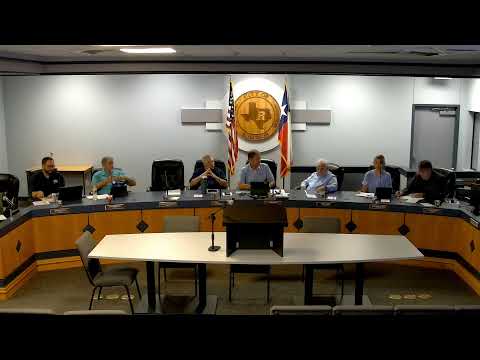
City Manager Craig briefed the Robinson City Council on options to finance a ladder fire truck already on order and to combine that financing with planned utility projects, and the council directed staff to return with detailed scenarios and revenue impacts.
Craig told the council the truck is near delivery and that staff have three financing options under consideration: a lease-purchase, a seven-year tax note and a 10-year certificate of obligation (CO). He said some pending bills in the current legislative session could limit local governments’ ability to issue certain debt beginning Sept. 1, and that financial advisers recommended completing issuance before that date if possible.
The council heard staff estimates and constraints: current market rates for lease-purchase offers were roughly 5.5%–6%, while recent tax notes and COs have priced closer to about 4% in the most recent transactions staff cited. Craig said those differences could be material to the city’s long-term cost. He also noted that debt structured as tax notes or COs can be included differently in the city’s tax-rate calculations — for example, certain debt serviced by taxes would affect the city’s debt portion of the tax rate and may or may not be subject to the 3.5% revenue cap referenced in the meeting.
Craig told the council the city currently has roughly $15 million in utility bond funds available for projects, and staff recently awarded a contract of about $7.3 million for a reservoir and expect a plant-yard piping project estimated at roughly $5 million. He said additional utility work remains (lift-station upsizing, gravity lines and force mains) and that some utility work should be completed ahead of resurfacing projects to avoid re-excavation of newly rebuilt streets.
Council members asked staff to present multiple “A, B, C” scenarios showing how different issue sizes and structures would affect the tax rate and utility rates. Craig and Jennifer — identified in the discussion as Jennifer with Specialized Financial — were asked to prepare scenarios that could include (a) a CO sized to finance the ladder truck only, (b) a CO that combines the ladder truck and selected utility projects, and (c) tax-note/lease alternatives, plus estimates of issuance costs and tax-rate impacts. Staff described a likely process: begin the financing process in June, complete required public notices (45 days were cited), return to council for an approval of issuance, and close the financing in the summer; staff emphasized the timeline would be driven in part by any final legislative action.
Craig and staff also described revenue-side considerations. He said a large commercial customer (identified as Walmart in the discussion) is expected to increase water usage and could contribute roughly $1.2 million–$1.3 million in annual water revenue; staff flagged that revenue as a reason some utility-financed projects might be paid from utility revenues rather than taxes. Council members asked about issuance scale and potential impacts on the city’s bond rating and were cautious about issuing excessive debt that could harm future borrowing capacity.
The council gave staff direction to proceed with preparing the financing options for council review, including tax-rate impact estimates and split scenarios for utility-funded versus tax-funded portions. No final financing decision was taken at the meeting.
Ending: Craig and Jennifer will return with modeled options, estimated interest costs, issuance expenses and tax-rate impacts so the council can decide whether to move forward before any state law changes take effect.