
Vermont forest products industry urges permitting, workforce and market support
Get AI-powered insights, summaries, and transcripts
Sign Up Free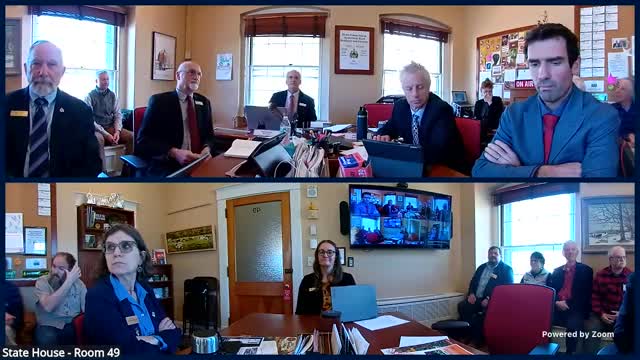
Summary
Representatives of the Vermont Forest Products Association and timber businesses briefed the House Agriculture, Food Resiliency & Forestry Committee on workforce shortages, mill closures, permitting delays and the climate role of working forests.
Gwen Zakoff, lobbyist for the Vermont Forest Products Association, and a cross-section of sawmill owners, consultants and forest managers told the House Agriculture, Food Resiliency & Forestry Committee that Vermont’s wood-products sector faces workforce shortages, high operating costs and permitting delays that threaten local mills and forest management.
The testimony came during a scheduled industry visit described by Zakoff as “Vermont Forest Products Association Day in the State House.” The group, which Zakoff said represents about 200 members across the wood-products lifecycle, urged the committee to consider measures that would make it easier to operate mills, sustain rural jobs and maintain working forests.
The industry witnesses detailed several interlocking challenges. Bill Singer, of the H. Johnson Company, called costs for energy, health insurance and property taxes “way too high” and said those costs make it hard to start and grow value‑added businesses. Ken Gonya of Gonya Lumber described local fuel‑switch benefits from wood chips, saying “one trailer load of our chips is 1,800 gallons of oil” and that two local schools use about 50 loads in a season.
Speakers also highlighted an aging workforce and the decline in local milling capacity. A consulting forester said many loggers and managers are in their 50s, 60s and 70s and that the state lacks a robust pipeline of younger workers. Committee members and witnesses repeatedly pointed to technical centers and vocational training as potential pathways to recruitment and retention.
Several witnesses framed forestry as part of Vermont’s climate strategy. Bill Singer and others noted carbon‑storage benefits of working forests and the potential for wood products and biochar to store carbon while replacing fossil fuels. Chris Fife, public affairs manager for Weyerhaeuser, said the state’s holdings and private timberlands play a role in carbon management and called for policies that recognize that role.
Industry witnesses raised Act 250 permitting as a specific constraint. Chris Fife and other representatives described cases where the Act 250 process—especially jurisdiction tied to a 2,500‑foot elevation contour—has slowed forest management on lands where operators contend the work is safe and necessary. “There’s no magic in this contour line,” Fife said, describing the contour as an administrative boundary that can add permitting layers for harvests at higher elevations.
Committee members thanked the delegation for the briefing and noted that an Act 250 implementation board is expected to deliver recommendations on permitting reform in the coming months. Representative Lipsky and others said the committee will review the board’s report and consider legislative options when the General Assembly reconvenes.
The session included brief descriptions of mills’ investments in efficiency and on‑site generation, and calls for clearer permitting timelines to reduce uncertainty for startups and small manufacturers.
Less formal than a regulatory hearing, the meeting served as an industry check‑in: witnesses described on‑the‑ground examples, quantified some local impacts and asked the committee to preserve market access for local wood, support workforce development, and ensure permitting recognizes the distinct nature of forest management.