
Rep. Lolli proposes downtown-focused continuing care retirement communities to ease senior access to services
Get AI-powered insights, summaries, and transcripts
Sign Up Free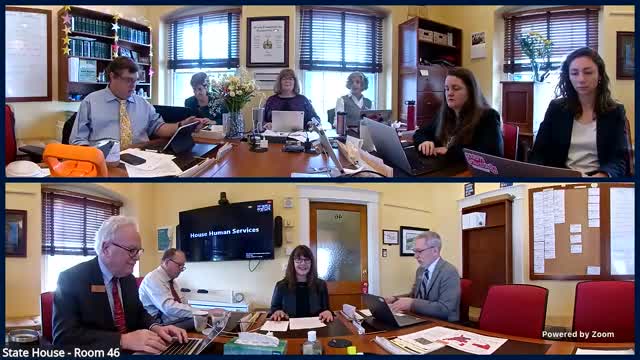
Summary
A state lawmaker introduced a short-form bill to encourage continuing care retirement communities (CCRCs) in downtowns, arguing the model can expand housing and local health access for older Vermonters and conserve Medicaid resources. Committee members discussed siting, scale and land-use impediments but did not take a formal vote.
Representative Lolli introduced a short-form bill to encourage continuing care retirement communities, also called life plan communities, as a way to expand housing and health access for older Vermonters.
"Continuing care retirement communities or life plan communities are a type of housing that addresses an older person's needs as they change over time from independent living to assisted living to skilled nursing care," Representative Lolli told the House Human Services Committee. She said locating CCRCs in downtowns could improve access to medical care, public transit and neighborhood services while freeing up family homes and conserving Medicaid for those who need it most.
The bill's sponsor framed the proposal as complementary to the land-use and infill reforms passed in the last biennium and said CCRCs could work where municipal water and sewer exist. She noted Vermont's current CCRC landscape is limited: Wake Robin, in Shelburne, is cited as the state's one established continuing care community, but it is not sited in a downtown. Champlain Housing Trust was offered as a contrasting example of an age-diverse, village‑centered development where older residents can walk to services and volunteer in the community.
Committee members sought practical details rather than considering policy changes immediately. Questions focused on scale (how many units make a facility financially viable), siting (which downtowns could host a CCRC), and whether the model would attract developers. The sponsor said larger hubs such as St. Johnsbury or Waterbury might be logical places to start and that affiliations with health providers could deliver escalating levels of care as residents' needs change.
Members suggested possible co-location with childcare, primary care, and transit to create multigenerational hubs. One committee member compared older, hilltop-style CCRCs with the more walkable village model the bill envisions and called for design templates and model town-plan or bylaw language to make permitting easier. The committee discussed using regional planning commissions and the Age‑Strong initiative to help draft model language and design templates for different community scales.
No formal vote or amendment was recorded on the proposal during the session. Committee discussion indicated interest in exploring model plan language, reviewing existing financing incentives in state housing programs, and examining whether scoring or bonus points in housing finance programs could favor age‑specific housing or CCRCs.
The sponsor asked the Agency of Human Services to "look into this" and begin a conversation with planning and housing stakeholders; committee members suggested follow-up work with regional planners and potential developers. The discussion closed without formal action; committee members said they would continue exploring regulatory, permitting and financing barriers before moving to drafting statutory language.
Locally oriented housing and transportation officials, municipal planners and developers are the likely next-stage stakeholders. The committee indicated it would consider model town-plan language, model bylaw language, and possible scoring incentives in housing finance programs to promote CCRCs in downtown settings.