Get Full Government Meeting Transcripts, Videos, & Alerts Forever!
Get email alerts on the Audit And Finance topic
No spam. Unsubscribe anytime.
LaSalle County Insurance Trust board reviews 2024 audit, fund balances and moves into executive session
Summary
Board heard a clean audit opinion from Mac and Associates, reviewed fund balances and transfers connected to bond payments, accepted administrative reports and voted to enter executive session to discuss pending or probable litigation and claim reserves.
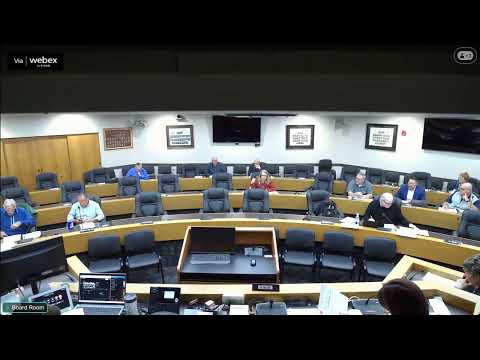
Sandy Billard, a member of the LaSalle County Insurance Trust Board serving as acting chair, opened the board's April 17, 2025 meeting and asked for a motion to allow her to serve as chair for the session; the board approved the motion by voice vote.
The board heard a presentation of the trustaudit from Mac and Associates. Tanya, an auditor with Mac and Associates, told trustees "we did have a clean opinion this year." She summarized key figures in the 2024 financial statements and explained the year-to-year movement in assets, liabilities and transfers.
Tanya said cash and investments totaled $10,300,000 for the year compared with $12,000,000 the prior year and described an accounts receivable that appeared because a county transfer was routed to an account that had been closed and later reissued by the county. She reported accounts payable of about $15,000 (up from $8,000), claims payable of $62,000 (down from $90,000), accrued interest of $211,000 and long-term obligations of about $11,600,000 compared with $13,400,000 the prior year. On the statement of activities she described charges for services and investment income that together resulted in a net increase in net position of about $251,000 for the year.
Tanya reviewed the fund-level tables: the general claims fund showed a fund balance of about $111,000; the principal fund held roughly $7,000,001 with a restricted fund balance of about $7,100,000; the premium reserve funds had roughly $1,100,000 after transfers down to pay bond obligations; and the levy abatement fund closed the year with about $1,737,000. She noted that several transfers during the year reflected closing and opening accounts with Charles Schwab and that paying down the 2013 and 2017 bond issues reduced premium reserve balances.
When asked to explain restricted fund balances, Tanya said "restricted means each of those funds are set up by your bond agreements...you can only use it for the purpose which it was set forth in the ordinance." She also summarized the long-term debt schedule and observed that the current year would be the last year for the 2013 and 2017 bonds and that payments on the 2019 bonds would begin in the subsequent period.
Board members asked technical clarifying questions about debt-service amounts, restricted balances and whether the presentation of multiple separate fund statements could be improved. Tanya told the board the audit work went "much more smoothly" this year and that Mac and Associates would return next month for an official motion to accept and place the audit on file, since acceptance had not been added to the meeting's agenda.
Finance and administrative staff provided routine reports. A staff presenter summarized requisitions and payments for the period ending March 31, 2025: total balances of $7,500,130 were reported, and four requisitions were listed (monthly CCMSI fee for May, a runoff fee for March, ICRMT monthly installment and an audit payment to Mac and Associates). The presenter also summarized insurance-related expenditures grouped by recipient, listing ICRMT premiums, non-ICRMT premiums, service fees (including CCMSI and consulting/administration), CCMSI runoff estimates and a Horton's brokerage fee. The board accepted those administrative reports and other staff reports (explicitly excluding the audit) by voice vote.
Laura, who presented the loss-control and safety committee report, described departmental distribution of emergency guidebooks, upcoming defensive driving classes May 6 and 7 in the sheriff's training room and planned ergonomic evaluations. She said there were no new workers' compensation claims reported for March and that year-to-date claims remained at five. The safety committee discussed heat-stress awareness, emergency alert toggles on phones, hazardous-material disposal resources and ongoing checklist reviews at several county facilities.
After accepting the reports, the board voted to move into executive session. The motion to go into executive session was made and seconded; legal reasons announced for the closed session included "pending probable and potentially imminent litigation" and discussion of reserves under settlement of claims, with a reference to the Open Meetings Act as read at the meeting ("5 ILCS 100" and a section read as "twentytwo c 11"). A roll-call vote to enter executive session recorded ayes from Savage, Small, Dinecki and Traeger and the motion passed.
No formal action to accept the audit was taken at the meeting; Mac and Associates will return next month for trustees to consider placing the audit on file. The board recorded routine approvals earlier in the meeting: allowing Billard to chair, approving corrected minutes from the previous meeting, and accepting staff reports for file.
The board's session then moved into closed-door executive deliberations on the stated litigation and claims-reserve topics.