Get Full Government Meeting Transcripts, Videos, & Alerts Forever!
MDOT officials outline aeronautics funding, airport projects and drone integration
Summary
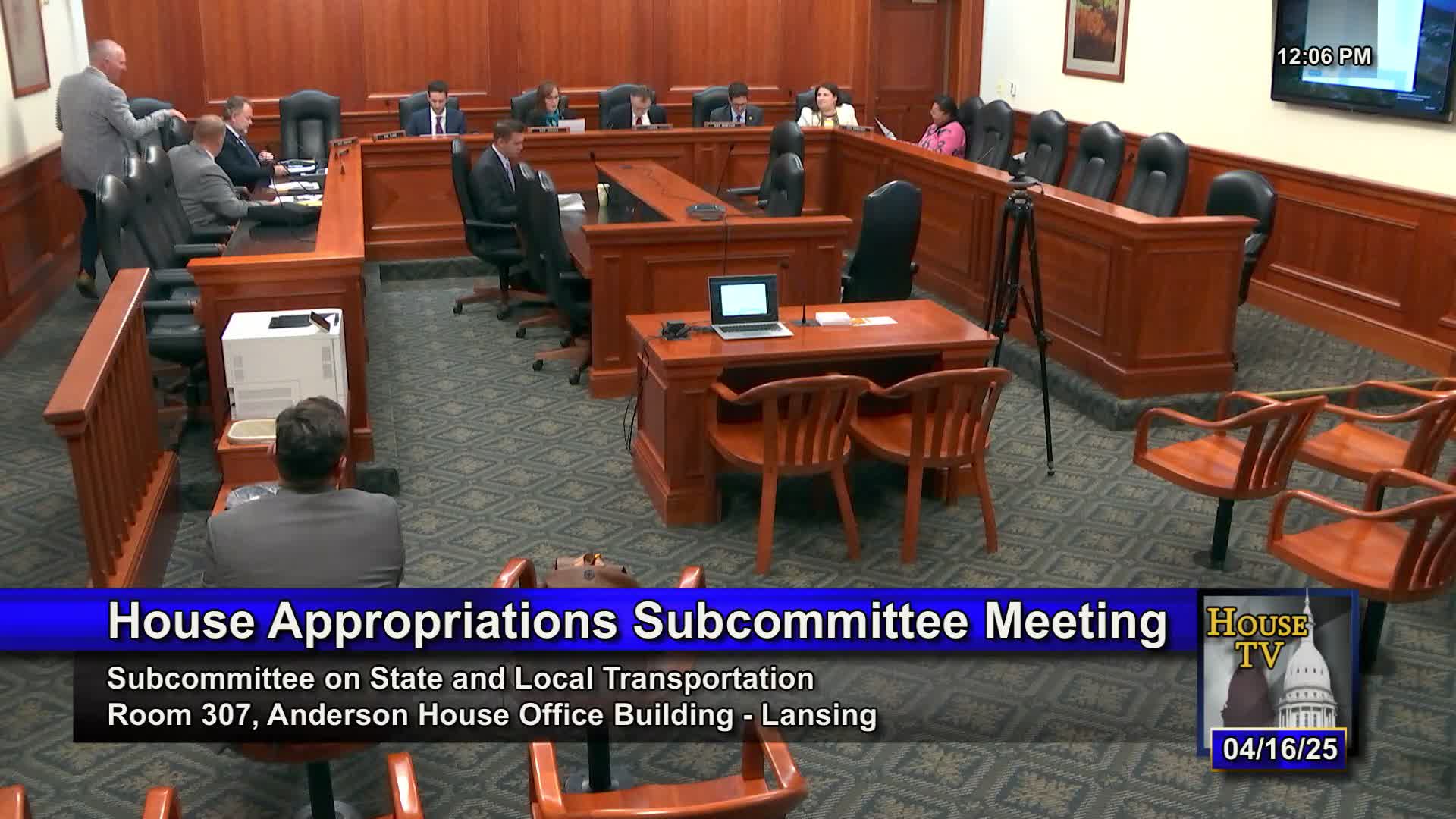
Michigan Department of Transportation officials briefed the Appropriations Subcommittee on State and Local Transportation on aeronautics funding sources, airport improvement planning, state-owned airport options and expanding uses for drones in inspection, emergency response and beyond-visual-line-of-sight pilots projects.
LANSING — The Michigan Department of Transportation’s aeronautics division told the state Appropriations Subcommittee on State and Local Transportation on Wednesday that the division is funded largely by aviation-related taxes and fees, supports airport capital projects across the state and is expanding drone operations to speed inspections and deliver goods in hard-to-reach locations.
MDOT aeronautics division head Brian Buds said the department oversees capital grants and engineering for public-use airports and performs safety inspections, airspace analyses and licensing of flight schools and aircraft operators. “We are in a, a generally pretty good spot currently,” Buds said of the department’s ability to provide matching funds for federal airport grants, “pending the parking tax comment.”
The briefing focused on several funding streams that support the aeronautics fund: an aviation fuel excise tax of 3¢ per gallon, a portion of aviation fuel sales tax and aircraft registration and licensing fees; and revenues from an off-site Detroit Metro Airport parking tax that currently contributes roughly $35 million statewide, of which about $6 million supports MDOT debt service and capital development. Buds told lawmakers that those parking-tax revenues are tied to bonds that he said will expire in roughly five years, creating a funding gap that will require attention.
Why it matters: MDOT’s capital program — the Airport Improvement Program — drives runway, taxiway and terminal projects at dozens of community and commercial airports. Committee members emphasized budgetary details: the subcommittee requested forward-looking five-year capital plans for general aviation airports and materials showing how state funds are spent…
Already have an account? Log in
Subscribe to keep reading
Unlock the rest of this article — and every article on Citizen Portal.
- Unlimited articles
- AI-powered breakdowns of topics, speakers, decisions, and budgets
- Instant alerts when your location has a new meeting
- Follow topics and more locations
- 1,000 AI Insights / month, plus AI Chat