Get Full Government Meeting Transcripts, Videos, & Alerts Forever!
Get email alerts on the Refugee Support topic
No spam. Unsubscribe anytime.
Davis County School District describes work of nine-person refugee support team funded by federal grant
Summary
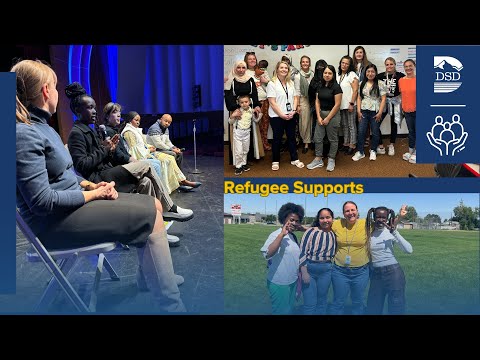
District staff said a federal Refugee School Impact Grant awarded in spring 2023 funded a nine-person team that provides classroom support, enrollment help, family outreach and community referrals for newly arrived refugee students and families.
Members of the Davis County School District refugee support team described how a federal Refugee School Impact Grant awarded in spring 2023 funded a nine-person team that helps newly arrived students and families adjust to the U.S. education system and pursue academic and social success.
The district’s refugee support staff told the meeting they work as refugee student success coaches, family liaisons and advocates. A speaker identified as a refugee student success coach said the team works directly in classrooms and one-on-one to coordinate academic plans with teachers and administrators, advocate for classroom modifications, and support English development, behavior and social-emotional learning. "Our primary goal is to help these students to feel comfortable at school and confident in their own abilities in order to succeed academically and socially," the coach said.
Why this matters: district presenters said the team’s services aim to reduce barriers that newly arrived students face after displacement and frequent school changes. Staff described both small milestones—students completing assignments independently—and social supports such as enrollment assistance, home visits and interpretation that the team said build families’ confidence to navigate school and community systems.
Presenters said the Refugee School Impact Grant prompted the district to hire nine team members. Team activities described in the presentation include classroom and one-on-one coaching; working with teachers to modify assignments; assisting families with enrollment; phone check-ins and home visits using interpretation services; and acting as liaisons to community refugee providers and nonprofits. The team also connects families to community resources and help applying for benefits.
Staff gave examples of programs the district offers or coordinates with community partners: English classes for adults, back-to-school parent nights, parent workshops, summer school programs and community refugee awareness events. Presenters said they use translation tools, including commercial machine-translation apps, to communicate when interpretation is not available.
Speakers shared several classroom and family anecdotes to illustrate impact. One coach recounted a math teacher telling the coach, "It is so nice to see him smile," after a previously frustrated student regained engagement. In another example, a coach said two siblings celebrated completing an essay and a PowerPoint independently. A different team member described a moment during an initial intake when a mother asked, "Will you remember my face? Will you find me?" and said the remark underscored families’ vulnerability on arrival.
Presenters emphasized limits on the team’s capacity: staff said they cannot solve all problems families face, such as affordable housing or complex employment barriers, but that the team aims to make families feel less alone and better able to access services. They said common nonacademic milestones—getting a driver’s license, securing housing or completing required school forms—were meaningful indicators of progress.
The presentation included repeated references to collaboration: refugee student success coaches work with counselors, administrators, family advocates and local nonprofit partners. Presenters said this network helps families learn to use school systems and community resources. No formal board actions, motions or votes were recorded during the presentation.
Looking ahead, presenters said they will continue enrollment assistance, outreach and coordination with community providers; they did not specify new budget requests or program expansions during the meeting.