Get Full Government Meeting Transcripts, Videos, & Alerts Forever!
Get email alerts on the Attorney General Presentation topic
No spam. Unsubscribe anytime.
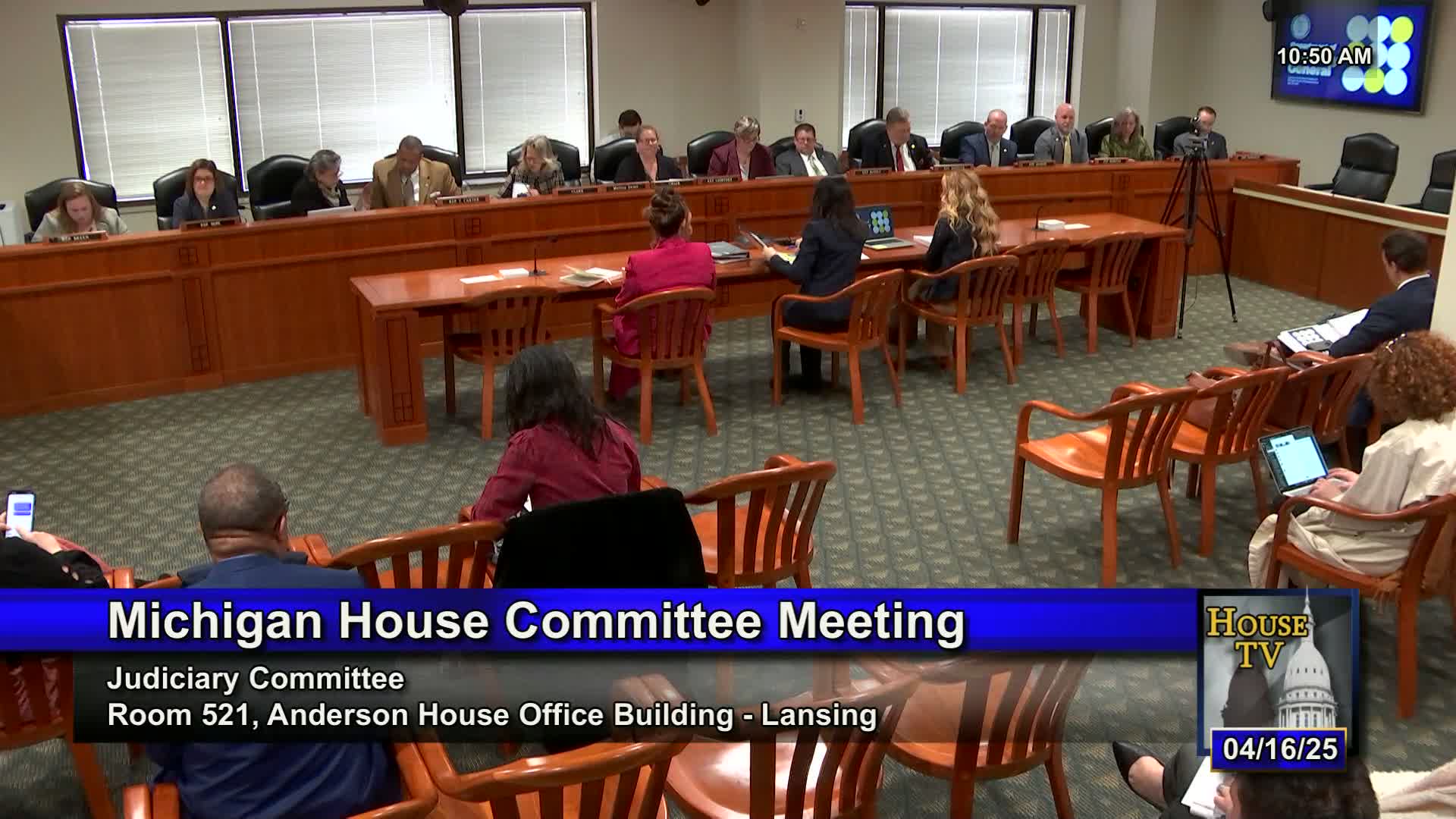
Attorney General Dana Nessel outlines office activities, budgetary impact and legislative priorities to Judiciary Committee
Summary
Attorney General Dana Nessel described the Department of Attorney General’s caseload, revenue recoveries, programs and legislative priorities to the House Judiciary Committee and urged against deep budget cuts.
Attorney General Dana Nessel told the House Judiciary Committee that the Michigan Department of Attorney General handles tens of thousands of matters annually, returns significant recoveries to the state and has a portfolio of programs addressing opioids, elder abuse, organized retail crime, human trafficking and juvenile diversion.
Nessel said the department handles about 48,000 cases per year (not including active investigations, expungement applications or trainings) and that the office operates on roughly one‑third of 1 percent of the state general fund. She said the department’s work returned hundreds of millions of dollars to Michigan in 2024 and that settlements and judgments generate revenue distinct from taxes and fees.
The Attorney General provided program details and recent results: - Opioid litigation: Nessel said the state has negotiated more than $1.63 billion in settlement awards to date (transcript figure given as approximately "1,634,000,000"); $282 million has been paid into the Michigan Opioid Healing and Recovery Fund and local governments have received more than $176 million, according to her remarks. - Child support enforcement: the department reported recovering about $26 million last year and assisting nearly 31,000 custodial parents; Nessel said the unit’s operating cost was about $5 million. - Utility rate cases: Nessel said the office’s special litigation work has produced substantial savings for ratepayers; the department recorded $439 million in savings in 2024 and indicated total savings during her tenure have reached approximately $4 billion. - Consumer protection and corporate oversight: the department registers charities (about 12,000 annually), fields more than 10,000 consumer complaints per year and pursues fraud and deceptive trade practices under the Michigan Consumer Protection Act. - Criminal justice units: Nessel described the SAKI (sexual assault kit initiative), Operation Survivor Justice (extraditions and prosecutions of defendants located outside Michigan), the Organized Retail Crime Unit (charged over 85 defendants in 42 cases, recovered over $10 million in merchandise and additional cash/cryptocurrency), and the Sentinel Project (unannounced nursing‑home visits; Nessel said there were 36 visits in 2024). - Address Confidentiality Program: Nessel said 315 applicants are currently enrolled. - Parole appeals: the department has a unit that files appeals on behalf of victims and county prosecutors in limited circumstances; Nessel noted the statutory time window for appealing parole board decisions can be short and suggested legislators consider extending it. - Job Court (diversion): Nessel said pilot programs in Genesee, Marquette (expanded into three counties in the Upper Peninsula) and Wayne County showed early results, including graduates and a low recidivism rate among participants.
Nessel described ongoing legislative priorities she plans to pursue with the committee, including bills related to human trafficking, guardianship and conservatorship reform, and consumer protection changes tied to pending court commentary on the Michigan Consumer Protection Act (she cited the Globe Life decision and ongoing matters such as an Eli Lilly case that the Michigan Supreme Court requested supplemental briefing on).
Committee members asked for clarification on several items during the question period: the parole‑appeals timeline (the AG’s office described a roughly 21‑day window for filing), the operation and recent graduates from Job Court, elder‑abuse reporting pathways and a new online portal the AG’s office launched to collect Social Security Administration complaints. On the Social Security portal, Nessel said the office launched the webpage the prior Friday and reported receiving complaints that included: 26 case submissions to the portal, 30 people reporting they did not receive a check, 15 reporting late checks, 28 reporting incorrect amounts, and 53 calls in which constituents could not reach the SSA by telephone.
Nessel urged committee members to avoid deep budget cuts to the department, saying private counsel cost multiples of public‑sector rates and that investments in the department save the state money through recoveries and litigation avoided or resolved.
The committee thanked the Attorney General and her team for the presentation and proceeded to the question period recorded in the committee minutes.