Get Full Government Meeting Transcripts, Videos, & Alerts Forever!
Get email alerts on the Local Food Policy topic
No spam. Unsubscribe anytime.
Commission recommends changes to allow urban gardens, limited on-site produce sales in residential zones
Summary
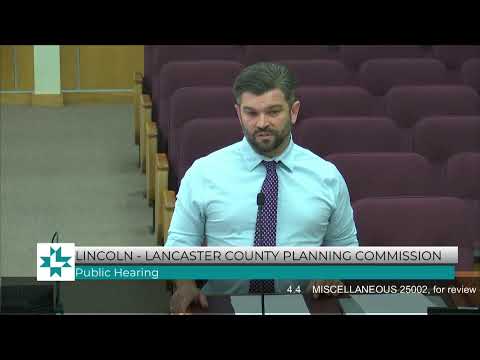
The commission voted 8-0 April 16 to recommend a text amendment to Lincoln Municipal Code to allow individuals to operate urban gardens on residential lots and permit limited on-site sales and home-occupation garden operations.
The Lincoln-Lancaster County Planning Commission voted 8-0 April 16 to recommend a city code change that would expand where residents can grow and sell produce and clarify rules for gardens operated as home occupations.
Text amendment 25-005 updates several sections of the Lincoln Municipal Code, including definitions and use-group rules, to allow a single person to operate an "urban garden" on a vacant, residentially zoned lot and to permit limited on-site sales of produce. The amendment also adjusts home-occupation rules so a garden does not need to be screened and the 20% indoor-use limit does not apply to outdoor garden area.
Andrew Theroff, planning staff, described the change as "primarily about local food in our residential neighborhoods and how do we support that," noting that current code treats community gardens differently from an individual farmer operating on a vacant residential lot. The amendment would allow individuals to farm vacant residential lots, or to sell produce from community or private urban gardens within specified limits.
Kim Morrow of the mayor's office said the changes support goals in the city's local food system plan and climate action plan. "We believe everyone deserves access to fresh, nutritious food and that building local food systems creates a more resilient community," Morrow said, adding that a University of Nebraska–Lincoln analysis shows 20 of Lincoln's census tracts have low or very low access to healthy food.
The amendment as discussed in the hearing includes limits on the frequency and infrastructure of on-site sales (staff said the draft limit mirrors peer cities and equates to about eight days per month, primarily weekends, and a yearly cap). Theroff said the city is coordinating with the health department and other partners on registration, safe handling, composting rules and best-practice education so gardeners understand existing regulations.
Supporters called the change a resilience and equity measure. Ken Winston, representing Nebraska Sierra Club and Nebraska Interfaith Power & Light, said the proposal "is a very common sense proposal" that can provide financial benefit and increase access to nutritious food. Residents and neighborhood garden organizers described benefits for low-income and immigrant communities that grow culturally specific produce.
The commission approved text amendment 25-005 by roll call vote, recorded as 8 to 0, and recommended it to the City Council for final action.