Get Full Government Meeting Transcripts, Videos, & Alerts Forever!
Get email alerts on the Environmental Sustainability Invasives topic
No spam. Unsubscribe anytime.
MDARD bureau details invasive-species detection, Right to Farm mediation and regenerative-agriculture pilot
Summary
The Bureau of Environment and Sustainability described early detection and eradication of plant pests, Right to Farm complaint mediation that led to on-farm improvements, a regenerative agriculture demonstration with a Veterans of Foreign Wars National Home, and export-certification work.
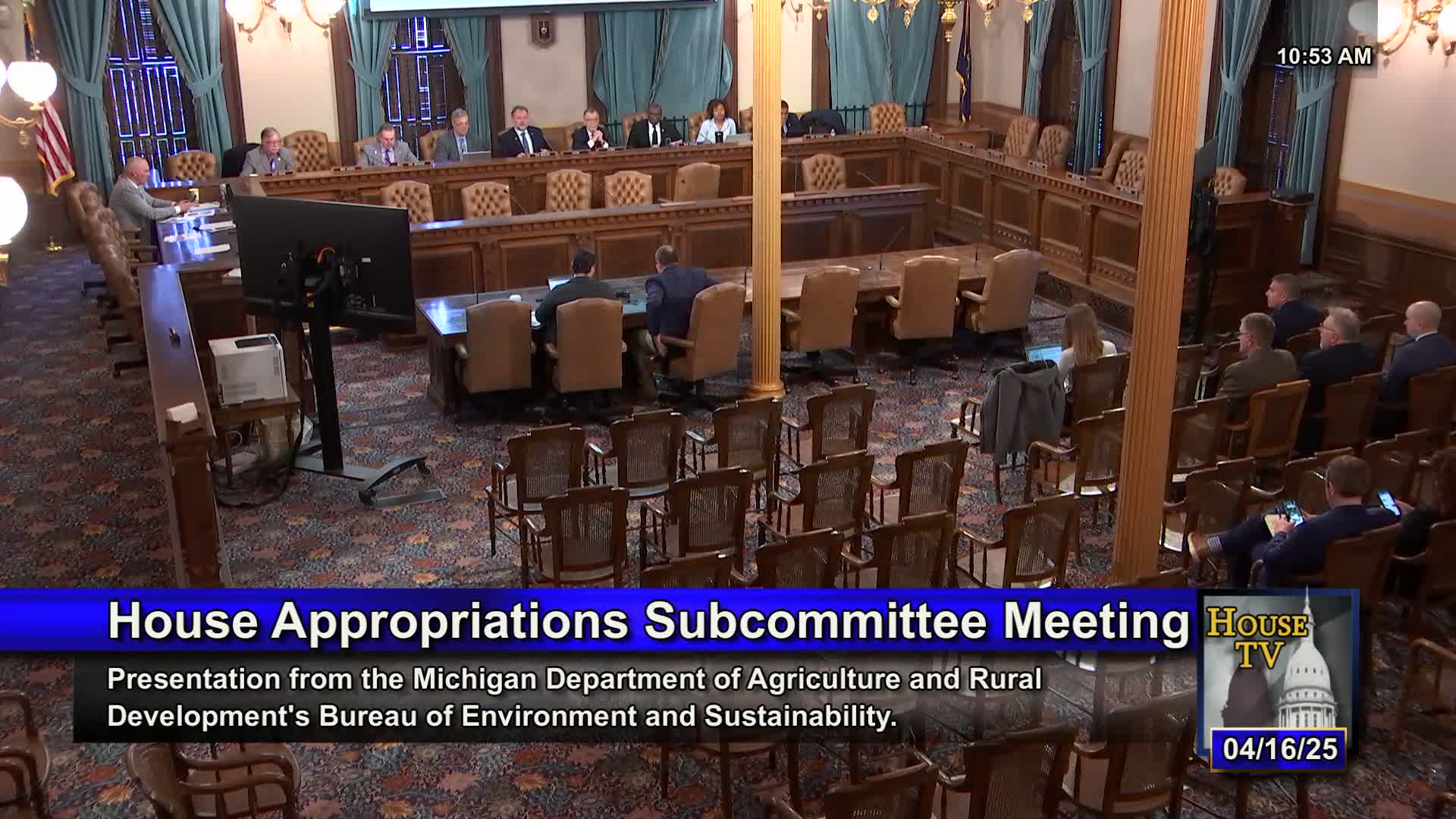
LANSING — Mike Phillip, director of the Michigan Department of Agriculture and Rural Development’s Bureau of Environment and Sustainability, told the House Appropriations Subcommittee that the bureau focuses on invasive-species prevention, water and soil quality, Right to Farm complaints and support for agricultural trade.
Phillip described a plum pox virus detection years ago that MDARD identified on a single backyard plum tree, sent for USDA confirmation and then eradicated; subsequent surveying of roughly 200,000 leaf samples found no further detections, which Phillip presented as an example of early detection and successful eradication.
The bureau oversees Right to Farm complaint investigations and promotes generally accepted agricultural management practices (GAMPS). Phillip gave an example in which MDARD and partners — including Michigan State University Extension and a county conservation district — worked with a producer found out of conformance. The farm subsequently adopted grazing-management plans, obtained cost-share assistance and expanded operations, Phillip said.
Phillip also described a federal grant-funded regenerative agriculture demonstration farm established with the Veterans of Foreign Wars National Home in Eaton Rapids; the project trains residents and supports workforce development in agricultural practices. He told lawmakers that the bureau issues roughly 7,000 phytosanitary and export-related certificates annually to support Michigan shipments to nearly 100 countries and described the operational detail required to meet importing countries’ pest-freedom rules.
Representative Joe O’Neil asked about cross-border trade and potential tariff impacts with Canada. Phillip said MDARD and state leadership have met with Canadian counterparts and industry stakeholders, and that “there is quite a bit of concern” among stakeholders; he added the department’s focus is on maintaining service and support while monitoring developments.
Phillip closed by urging legislators to contact the department if they want MDARD staff to attend local events or provide district-level briefings.
No formal policy votes were taken on the bureau’s programs during the presentation; MDARD officials offered to supply additional materials on request.