Get Full Government Meeting Transcripts, Videos, & Alerts Forever!
Get email alerts on the Solar And Battery Regulations topic
No spam. Unsubscribe anytime.
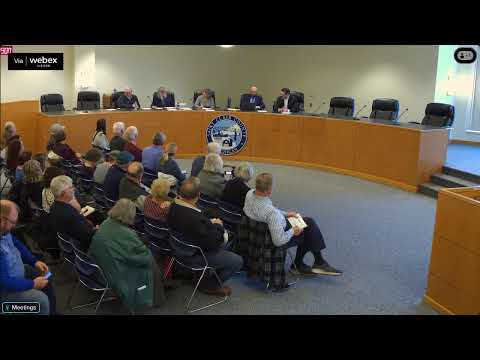
St. Clair County hearing draws large public turnout over proposed solar and battery facility rules
Summary
A crowded St. Clair County Health Department public hearing brought residents, firefighters and medical professionals to urge stronger noise, fire-safety, decommissioning and water‑quality requirements in draft regulations for industrial solar arrays and battery storage.
St. Clair County held a public hearing April 8 on proposed regulations for large solar energy and battery energy storage facilities, and scores of residents, first responders and health professionals urged the county to add stricter requirements on noise, fire response, decommissioning and water and soil testing.
The hearing, convened by Liz King, health officer and director of the St. Clair County Health Department, opened with an explanation that the draft rules could be revised, presented as written for adoption or withdrawn after officials review public comments. King said the hearing is a legally required step in the county’s regulatory process.
Why it matters: The proposed rules would set county-level standards for siting, operations, emergency plans and end‑of‑life disposal for industrial solar arrays and on‑site battery storage. Speakers said the county health department’s rules could be the primary local protection for residents who live near proposed projects and asked for stronger language on measurable protections and enforcement.
Speakers raised several recurring concerns. Multiple residents reported constant high‑pitched noise and persistent hums near operating inverter stations and urged enforceable noise limits and measurement protocols. Peter Sinclair, a videographer who follows energy projects, described solar as “one of the least cost forms of new electrical generation,” while other speakers said measured noise near inverter equipment was far higher than ambient levels: “It measured at 95.4 decibels,” said Dr. Catherine Albrecht, who said the sound near an inverter gave her tinnitus after repeated exposure.
Fire risk and first‑responder readiness were a second major theme. Several public commenters described lithium‑ion battery fires as prone to thermal runaway, prolonged burning and toxic smoke and asked for clear, funded emergency plans. Marilyn Strickler and fire‑service commenters asked whether local departments have enough airpacks, spare turnout gear and monitoring equipment if a multi‑day battery fire or panel fire were to occur. One commenter summarized the evacuation concern bluntly: “If we had a lithium fire in our community from a battery storage plant, we are not ready for that,” saying such an event would have “devastat[ing]” effects on water, air and land.
Multiple speakers pressed for stronger financial guarantees and enforcement language. Dolores Pickard cited the National Renewable Energy Laboratory estimate of roughly $360,000 per megawatt in decommissioning cost and said the draft county requirement of $100,000 per megawatt is too low. She recommended higher, daily fines for violations and direct county or drain‑commissioner oversight through the permitting and operational life of a facility.
Water, soil and toxic‑material testing also featured prominently. Dr. Catherine Albrecht urged requiring Toxicity Characteristic Leaching Procedure (TCLP) testing and baseline and ongoing groundwater and soil monitoring, and Katie Jagazinski described a case in Adrian, Michigan, where PFAS was detected near a solar facility and residents on private wells were subject to water testing after the fact. Several speakers asked that any monitoring trigger a written remediation and compensation plan for affected well owners.
Speakers also raised visual impacts, glare and agricultural impacts. Sharon Hesling requested a required glint and glare study to assess effects on neighboring properties and public roads. Farmers and farm advocates warned that panel breakage or storm damage could spread glass shards and heavy metals into fields and make land unsuitable for certain crops; several said farmland preservation policies should be prioritized over large ground‑mounted industrial arrays.
Supporters and nuance: A smaller number of speakers with experience installing residential or small commercial systems urged balanced, technically informed rules that do not freeze out future, safer technologies. John Anter, a master electrician, said new battery chemistries (for example, sodium‑ion) and improvements to design and installation can reduce risk and argued rules should be specific enough to protect residents but not so restrictive that technological improvements are blocked.
Next steps: County staff said the health department will collect written comments (including emails and letters received during the comment window) and that the draft could be revised accordingly before any formal adoption step by the Board of Commissioners. No vote or final action occurred at the hearing.