Get Full Government Meeting Transcripts, Videos, & Alerts Forever!
Get email alerts on the Legislation topic
No spam. Unsubscribe anytime.
Indiana Senate approves wide range of bills, fails one education measure; honors legislative interns
Summary
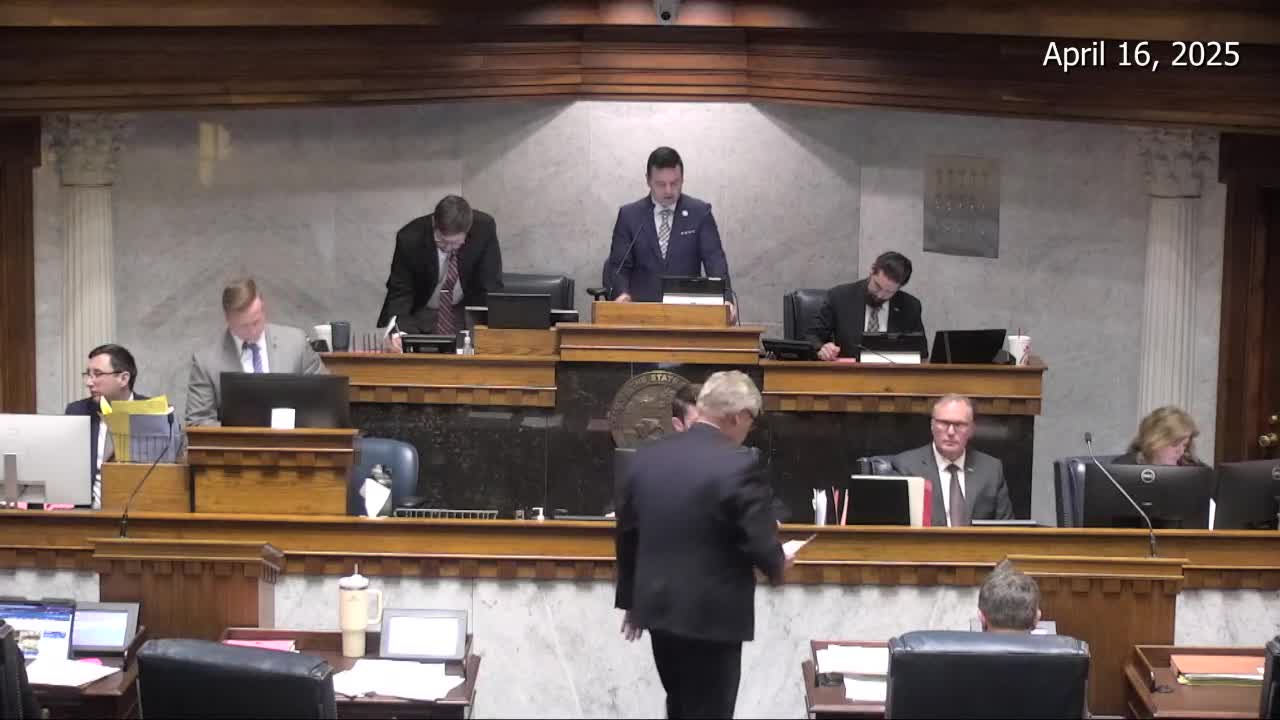
The Indiana Senate on April 16, 2025, approved a series of bills—ranging from limits on charitable bingo operations to new cybersecurity rules for public water systems—while one education bill failed to achieve the constitutional majority required for concurrence.
The Indiana Senate on April 16, 2025, approved a series of bills—ranging from limits on charitable bingo operations to new cybersecurity rules for public water systems—while one education bill failed to achieve the constitutional majority required for concurrence. Lawmakers also adopted multiple resolutions honoring legislative interns and accepted Verizon-sponsored scholarships for the session’s top interns.
Why it matters: The bills the Senate approved affect a variety of policy areas—public safety and gaming oversight, landlord-tenant records, water infrastructure and cybersecurity, statutory limits for certain criminal prosecutions, and health-care prior authorization rules. Taken together, the measures will move to the House (or to the governor when finalized) for the next steps in enactment or implementation.
Most notable floor actions
- Gambling and charitable gaming (Senate Bill 108): The Senate concurred with House changes to clarify that qualified veterans’ and fraternal organizations may use net proceeds from allowable activities for lawful purposes and to add several regulatory limits. The bill includes a prohibition, effective Jan. 1, 2026, that a facility may not be used for bingo or similar games on more than three calendar days per week; it requires organizations with annual gross receipts of $1,000,000 or more to submit records for independent audit on license renewal; and it requires workers assisting bingo events to wear name badges. The motion to concur passed, 36 ayes, 1 no.
- Eviction records and expungement (Senate Bill 142): The chamber approved an eviction-related bill that clarifies when tenants may seek expungement of eviction records. The Senate and House negotiated language removing automatic expungement; instead, the transcript indicates an affirmative motion must be filed either in court after judgment or by filing a motion when a settlement occurred outside court. The motion to concur passed, 35 ayes, 1 no.
- Water reuse and cybersecurity (Senate Bill 459): The Senate approved the IDEM agency bill addressing two provisions: standards for reclamation and reuse of treated wastewater and new cybersecurity requirements for public water and wastewater systems (including annual cybersecurity assessments and timely incident reporting to the Office of Technology). The motion to concur passed unanimously, 39 ayes, 0 nos.
- Health prior authorization reform (Senate Bill 480): The Senate concurred with House edits to a prior-authorization bill that keeps timelines and other requirements intact, removes prior authorization for the first 12 visits to a physical therapist or chiropractor in the private-insurance space, and aligns clinical language between chambers. The motion to concur passed, 39 ayes, 2 nos.
- Statute of limitations for certain DNA-based prosecutions (Senate Bill 151): The Senate approved a change that extends the limitations window in DNA-discovery cases for certain serious offenses from five to 10 years under the House-concurred version; sponsors described it as an incremental improvement. The motion to concur passed, 34 ayes, 3 nos.
- Warrant-recording and transcript procedures (Senate Bill 159): The chamber approved changes that affect processes for recording and later transcribing warrant-related proceedings; the motion to concur passed unanimously, 38 ayes, 0 nos.
- Other concurrence votes: A range of agency and program bills were approved with largely unanimous margins: S.B. 108 (above), 141 (investigator/lineup protections; 35–1), 159 (warrants; 38–0), 198 (language change adding the word "reasonable" in House amendment; 34–0), 216 (professional licensing clarification; 39–0), 259 and 318 (various administrative/oversight changes; 39–0), 365 (workforce and career-coach grant language; 37–1), 366 (an education-related bill presented by Sen. Rogers) failed for lack of a constitutional majority, 24–13, and S.B. 405 (labor/contracting restrictions for governmental asset leases) later passed, 29–9. Additional bills approved included S.B. 461 (grain indemnity fund reforms; 41–0), S.B. 473 (health workforce/professional scopes in Title 16/25 matters; 41–0), and S.B. 516 (economic development/IEDC technical clarifications; 41–0).
Failed measure
- Education-related concurrence (Senate Bill 366): A House-concurred version of an education bill presented by Sen. Rogers did not receive the constitutional majority required for concurrence; the roll call was 24 ayes, 13 nos, and the motion failed. The sponsor indicated she could call the measure again on a subsequent day.
Resolutions and intern recognitions
The chamber adopted multiple ceremonial and special resolutions honoring session interns. The Senate adopted Senate Resolution 45 (Democratic caucus interns) and Senate Resolution 33 (majority caucus interns) and several House-concurrent resolutions recognizing high-school teams and other honorees. Verizon representatives presented the annual Verizon scholarships: Robin Morton was named the Democratic caucus Verizon scholarship recipient, and Ali Barber received the Republican caucus Verizon scholarship; the Verizon scholarship amount is $3,000 per caucus and Verizon noted the company has contributed more than $300,000 to the program to date.
What lawmakers said
Senator Sarah Alting, speaking for S.B. 108, said the changes "provide qualified organization(s) may use net proceeds from allowable activity for any lawful purposes" and described added controls aimed at venues in northern Indiana.
Senator Sarah Bush, presenting S.B. 459 as a fill-in, described it as bipartisan and said it "addresses two critical areas, reclamation and reuse of treated wastewater," and "cyber security for water and wastewater systems."
Senator Chris Johnson, discussing S.B. 480, said the measure pairs clinical prior-authorization language with House changes and removes prior authorization for an initial set of physical therapy or chiropractic visits in the private-insurance context.
Meeting context and next steps
The Senate adopted procedural motions (including withdrawal of a concurrent motion and internal appointments) and adjourned to reconvene April 17, 2025, at 1:30 p.m. Most bills on which the Senate concurred will be transmitted to the House (or are being communicated to the House), and bills that have passed both chambers will proceed to the governor or to implementation steps described in the enacted language. The education bill that failed may be brought up again on a subsequent day.
Votes at a glance (selected floor actions from April 16, 2025)
- S.B. 108 (charitable gaming/bingo limits and audits): Passed, motion to concur 36 ayes, 1 no. - S.B. 141 (lineup/investigator protections; AI limitations): Passed, motion to concur 35 ayes, 1 no. - S.B. 142 (eviction record expungement procedures): Passed, motion to concur 35 ayes, 1 no. - S.B. 151 (statute of limitations/DNA discovery extension): Passed, motion to concur 34 ayes, 3 nos. - S.B. 159 (warrant recording/transcript timing): Passed, motion to concur 38 ayes, 0 nos. - S.B. 198 (minor language change; "reasonable" added): Passed, motion to concur 34 ayes, 0 nos. - S.B. 216 (licensing/agency clarifications): Passed, motion to concur 39 ayes, 0 nos. - S.B. 259, 318: Passed, motions to concur 39 ayes, 0 nos (each). - S.B. 365 (career-coach/grant language): Passed, motion to concur 37 ayes, 1 no. - S.B. 366 (education measure): Failed for lack of constitutional majority, 24 ayes, 13 nos. - S.B. 405 (contracting and labor clauses for public asset leases): Passed, motion to concur 29 ayes, 9 nos. - S.B. 459 (IDEM: water reuse and cybersecurity): Passed, motion to concur 39 ayes, 0 nos. - S.B. 461 (grain indemnity statute changes): Passed, motion to concur 41 ayes, 0 nos. - S.B. 473 (health workforce/Title 16/25 language): Passed, motion to concur 41 ayes, 0 nos. - S.B. 480 (prior authorization reforms): Passed, motion to concur 39 ayes, 2 nos. - S.B. 516 (IEDC/land purchase and tech-park office changes): Passed, motion to concur 41 ayes, 0 nos.
Ending
Senators concluded the session after adopting the resolutions and votes above. Senators identified follow-up opportunities for bills that failed or require additional drafting; the education bill that failed may return for another vote on a different day. The Senate is scheduled to meet again April 17, 2025, at 1:30 p.m.