Get Full Government Meeting Transcripts, Videos, & Alerts Forever!
Get email alerts on the Zev Credits topic
No spam. Unsubscribe anytime.
Bill would tax ZEV credits; automakers, advocates and critics disagree on effects
Summary
Senate Bill 5811 would impose new taxes on the sale, banking and pooling of zero‑emission‑vehicle (ZEV) credits used for compliance with state vehicle standards; testimony ranged from opponents who said the measure penalizes automakers that over‑comply (and could depress credit markets) to supporters who argued for revenue capture.
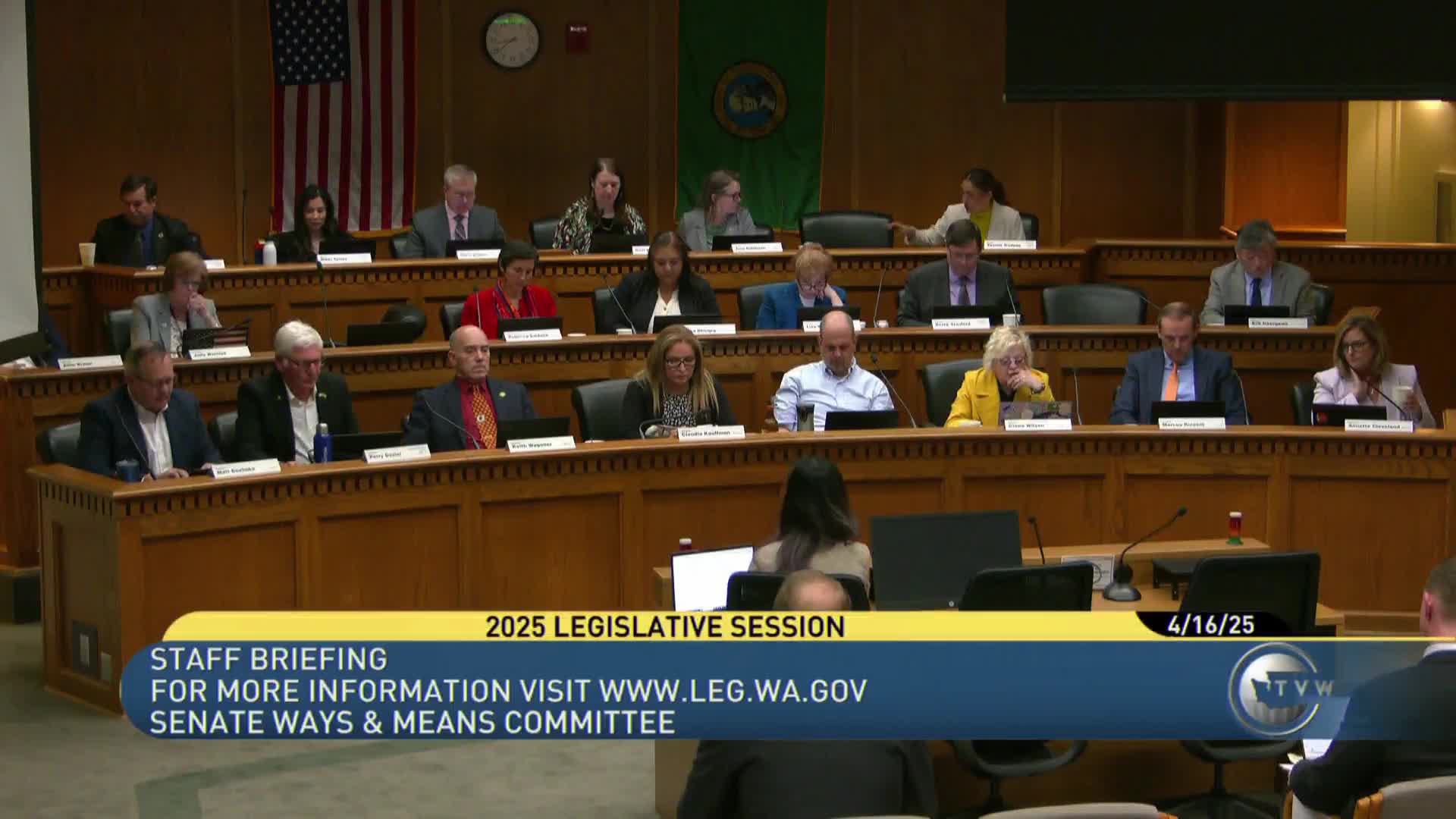
Senate Bill 5811 would impose a tax on certain transactions involving zero‑emission‑vehicle (ZEV) credits that manufacturers earn, bank, sell or pool under the state's Clean Vehicle / ZEV compliance program, staff told the Ways & Means Committee.
Tianyi Lin, committee staff, summarized the program history and the bill's mechanics: under California‑aligned ZEV rules, manufacturers earn credits for delivering qualifying vehicles; credits can be banked, traded between manufacturers, or pooled/transferred for use in other states with similar standards. SB 5811 would tax the taxable value of credits sold (actual sale price) at 2% and tax banked credits at 10% using an average credit price calculated by DOR; pooled credits would not have the small‑transaction exemption and could be taxed. The bill would deposit 70% of receipts to the State General Fund until 06/30/2027 and then to the Carbon Emission Reduction Account, with 30% to the Electric Vehicle Incentive Account; DOR reporting and manufacturer reporting obligations are included.
Witnesses were sharply divided. Automaker and industry groups including the Alliance for Automotive Innovation and Rivian warned that taxing credits, especially banked credits, would interfere with market‑based compliance mechanisms, reduce credit availability, and could slow deployment and investment. Tesla and other manufacturers with large banked credit positions were identified in testimony as materially affected; one public witness framed the bill as a targeted tax on Tesla because of large credit holdings.
Policy and fiscal witnesses characterized the proposal as a revenue source tied to the state's electric‑vehicle transition; staff presented a partial fiscal note estimating about $78 million in FY 2027 and larger amounts thereafter under certain assumptions (the fiscal note assumed a $6,000 per‑credit valuation and that manufacturers did not pull credits in the projection). Implementation costs and reporting requirements were discussed.
The committee did not take a recorded vote; staff and industry witnesses agreed additional technical work and market analysis would be required to finalize any tax design that applies to compliance credit markets.