Get Full Government Meeting Transcripts, Videos, & Alerts Forever!
Get email alerts on the Bno Tax Restructure topic
No spam. Unsubscribe anytime.
Committee hears wide testimony on proposed B&O rate increases and new surcharges
Summary
A proposed substitute to SB 5815 would raise multiple B&O rates, expand and raise sector surcharges (notably advanced computing and financial institutions), and narrow the investment‑income deduction; business groups warned of price and competitiveness impacts while labor, education, and some civic groups supported the revenue for schools and services.
Senate Bill 5815, as described by committee staff, would raise a range of base B&O rates and impose new or higher surcharges on specified sectors while narrowing the investment‑income deduction that some taxpayers currently claim.
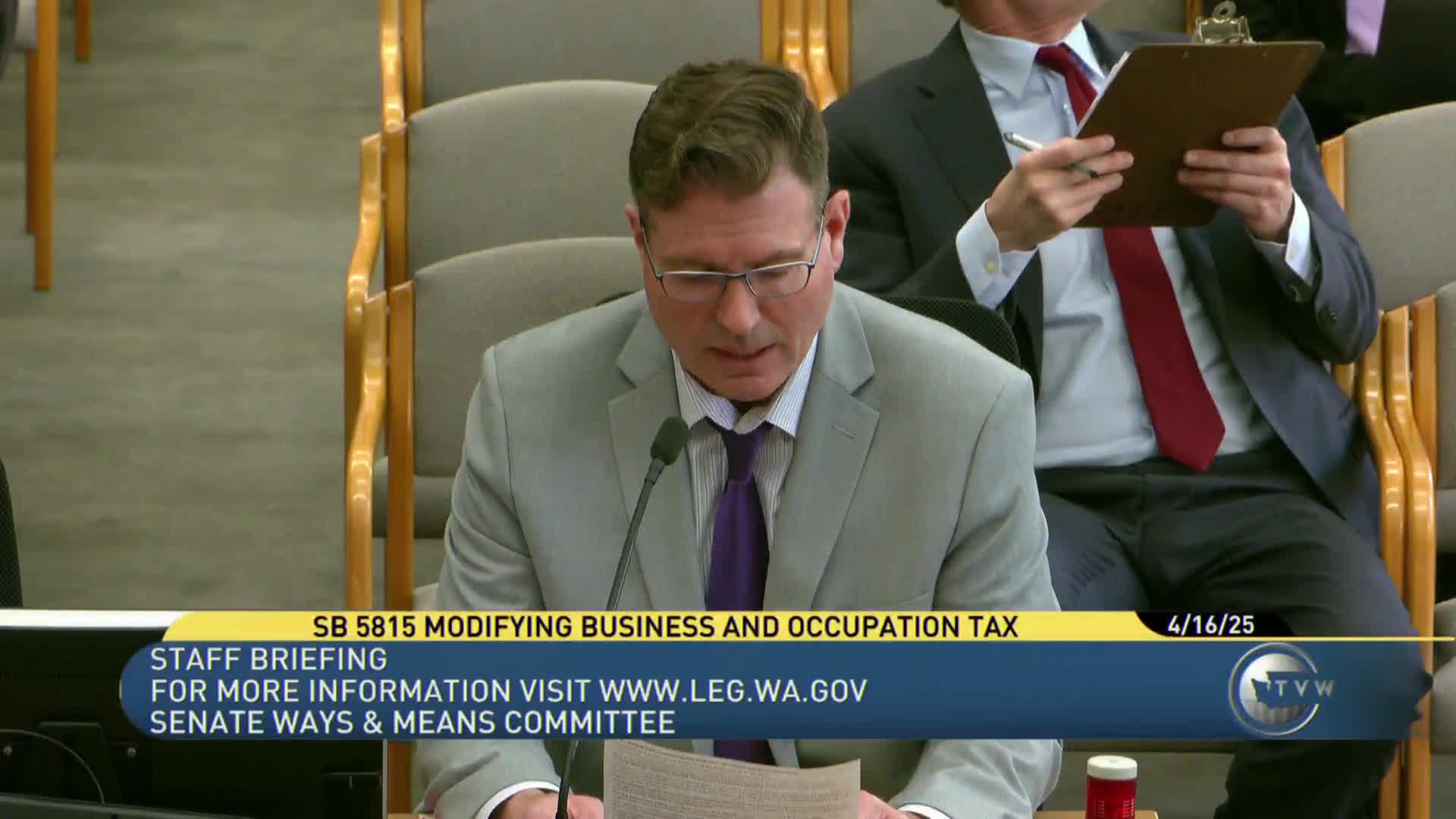
Jeff Mitchell, staff to the committee, described the proposed substitute: increases to major B&O rates (for example, retailing and manufacturing rates rising modestly), a higher services rate for large businesses, increases in the advanced‑computing surcharge (and raising the cap on that surcharge), an increase in the financial‑institution surcharge, and a temporary 0.5% surcharge on taxpayers with Washington taxable income above $250 million (applied only to income above that threshold and with enumerated exemptions). Mitchell also said the substitute codifies a post‑Antioch interpretation limiting the B&O investment‑income deduction to income incidental to a business's main purpose and proposes DOR rulemaking authority and reporting requirements.
Mitchell presented a four‑year revenue estimate of about $6.4 billion, with roughly $5.2 billion estimated to the general fund and about $1.2 billion to the workforce education investment account, and noted administrative and expenditure impacts to implement changes.
Public testimony split along sector lines. Trade associations and small‑business groups — the Association of Washington Business, Washington Retail Association, Associated Builders & Contractors, Washington Food Industry Association, and others — opposed the bill citing narrow profit margins, competitiveness concerns, and the potential for the tax increases to be passed to consumers. The Washington Bankers Association and other financial groups said the proposals would double‑tax banks; hospitals and health‑care provider groups said higher rates on services and a new surcharge would increase health‑care costs and could worsen access. Industry groups for petroleum, fuel distribution and grocery raised concerns about pass‑through effects on fuel and food prices.
Proponents included labor unions, higher‑education representatives, and nonprofit groups that said modest increases on very large businesses and surcharges on advanced computing and financial institutions would raise substantial revenue for education and social services with limited burden on most small businesses. Tech and university speakers urged support for the increased advanced‑computing surcharge to fund higher education and workforce development; some said the surcharge cap should be raised to capture high returns for public investment.
Several witnesses urged narrower exemptions or carve‑outs (for groceries, prescription drugs, and certain nonprofit investment income), and CPA and nonprofit witnesses asked for clearer statutory language to avoid unintended tax on retirement accounts or family trusts. The committee did not take a recorded vote at the hearing.