Get Full Government Meeting Transcripts, Videos, & Alerts Forever!
Get email alerts on the Taxes Education topic
No spam. Unsubscribe anytime.
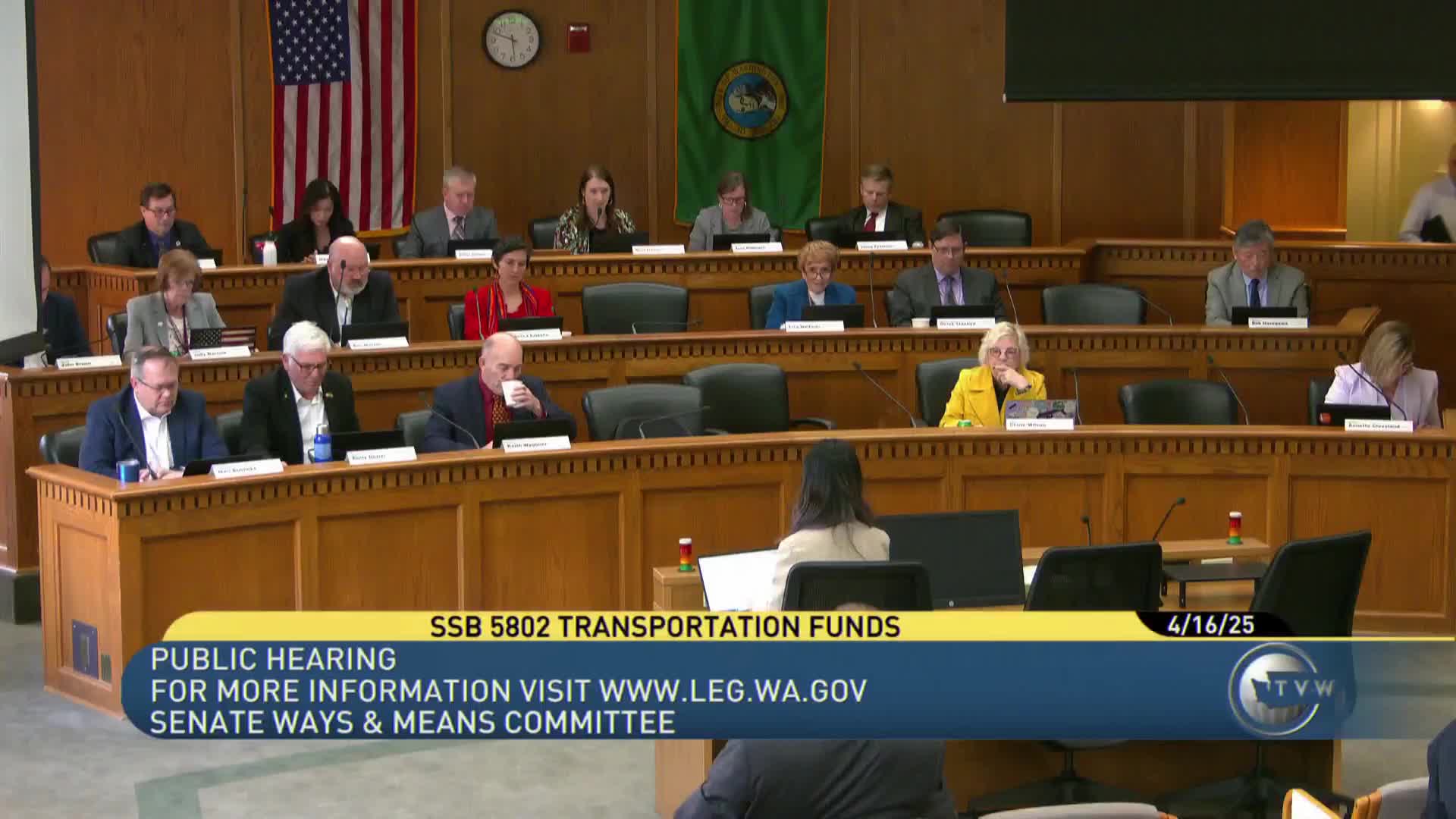
Bill to expand capital‑gains and estate taxes draws broad public support and opposition at committee hearing
Summary
Senate Bill 5813 would increase a capital‑gains surcharge on gains over $1 million and raise estate‑tax rates and the exclusion amount; staff and supporters said the revenue would be dedicated to the Education Legacy Trust Account to support K–12 and higher‑education funding, while opponents said it would hurt investment and small businesses.
Senate Bill 5813 would change the state’s capital‑gains excise tax and the estate tax to increase revenue deposited into the Education Legacy Trust Account, staff told the Ways & Means Committee at a public hearing.
Tianyi Lin, committee staff, summarized the bill's three parts: a new 2.9% surcharge on capital gains above $1 million beginning in tax year 2025; an increase in the estate-tax exclusion to $3 million and an increase in estate‑tax top rates to a range topping at 35% (with tabled brackets described in the bill report); and application of some provisions to deaths on or after Jan. 1, 2025. Lin said the Department of Revenue's revenue estimate is approximately $183 million in fiscal 2026 and $168 million in fiscal 2027, and that combined capital‑gains and estate‑tax changes would total about $680 million over the four‑year outlook.
Public testimony was extensive and sharply divided. Supporters — including the Washington State Budget & Policy Center (Eli Taylor Goss), the Washington Education Association (Kerian McMichael), the Economic Opportunity Institute (Tracy Underwood), Children's Alliance (Annie Michelle Jean Pierre), and the Washington State PTA (Lizzie Sebring) — urged the committee to use the revenue to avoid cuts to K–12 and higher education, child care and early learning, special education, and other safety‑net services.
Opponents included a mix of individual citizens and business groups. Patrick Connor of NFIB urged adjustments to small‑business carve‑outs for estate transfers of family businesses. Steve Boyd and other business representatives argued the bill would make Washington less competitive and could drive firms and wealthy individuals out of state. Testimony also included polling and public‑opinion research cited by Northwest Progressive Institute showing majority support for raising the capital‑gains rate in a sample of likely voters.
Staff noted Department of Revenue implementation costs — about 1.9 FTEs in 2026 and modest continuing costs — and emphasized that the estimates are based on the November 2024 economic and revenue forecast.
No vote was taken in committee that day; the hearing record includes written testimony and multiple named witnesses who testified in person and online.