Get Full Government Meeting Transcripts, Videos, & Alerts Forever!
Get email alerts on the Emergency Communications District topic
No spam. Unsubscribe anytime.
Copperas Cove council hears presentation on creating regional 9-1-1 district to route 50-cent fee to CTCOG
Summary
City staff and a Central Texas Council of Governments representative outlined a proposal to form an emergency communications (9-1-1) district that would remit a 50-cent per-phone fee directly to the regional council to fund next-generation 9-1-1 infrastructure; no formal action was taken during the April 15 workshop.
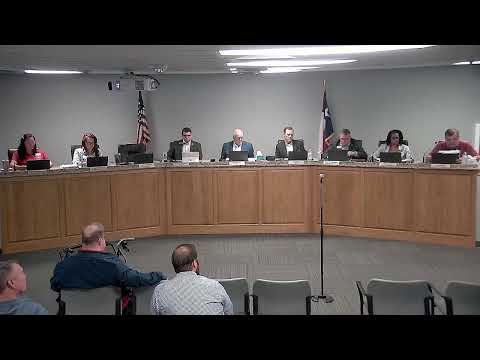
Copperas Cove city officials heard a presentation April 15 on creating a regional emergency communications district that would direct a 50-cent per-phone 9-1-1 fee to the Central Texas Council of Governments for local use.
City Manager Ryan Haverlaw told the council that “anybody that has a phone pays a fee as part of their bill to have that phone that goes to 9-1-1 services,” and that under the proposed district the 50-cent fee “would now be remitted directly to” the regional body rather than flowing first through the state.
The change, presenters said, would leave more of the fee available to the region for equipment, operations and next-generation 9-1-1 services. “Emergency communications district is basically, it's a designated geographic area that manages the infrastructure for carrying 911 calls,” said Nelson, a Central Texas Council of Governments representative, describing the district’s focus on call routing, dispatch console infrastructure and geospatial addressing used for modern routing.
Nelson said the district would cover the back-end infrastructure that ensures a 9-1-1 call reaches a dispatch center and that the district is not the entity that responds to emergencies. He described the governance model as a board of local elected officials; the presentation said the initial governing body would be the Central Texas Council of Governments’ executive committee, representing the seven-county region.
Ryan Haverlaw also explained the current flow: the fee is collected on phone bills, remitted to the state, and then allocated to the region through CTCOG. Under the district approach, the fee would be remitted directly to CTCOG for regional administration. Nelson noted the regional system and funding arrangements in the state, saying the “CSEC system in the state, which we are a part of now, it covers about 15%.”
Council members were presented with an updated slide deck that staff distributed at the meeting. Mr. Jim Reid, listed as CTCOG’s executive director in the presentation, was not present.
No formal motion or vote occurred during this workshop item. The presentation was informational; presenters made themselves available for questions and staff provided updated materials for council review.