Get Full Government Meeting Transcripts, Videos, & Alerts Forever!
Get email alerts on the Downtown Redevelopment topic
No spam. Unsubscribe anytime.
Middletown holds town hall on downtown “refresh”; staff to compile public input, pursue RFQ process
Summary
City staff and residents discussed reuse of vacant downtown property, a park over the CSO basin, EV chargers, DORA boundaries and enforcement of vacant-property rules; staff will compile comments and may use an RFQ to solicit developers.
MIDDLETOWN, Ohio — City staff on March 11 gathered residents, business owners and university partners at a public town hall to collect input for a planned downtown “refresh,” laying out project boundaries, timelines for a combined sewer overflow basin and related amenities while flagging next steps on developer outreach and vacant-property enforcement.
The meeting matters because the city is seeking both private developers and community buy-in to repurpose large vacant parcels downtown and to attract housing, retail and public space that could change how people live, work and visit in Middletown.
The city’s director of community and economic development, Lisha Moreland, opened the session by summarizing past efforts and current assets and timelines. She told the room, “We’ve not had a very good track record. Let’s just be honest. We haven't had a good track record,” and described a consolidated department intended to deliver a more coordinated redevelopment effort.
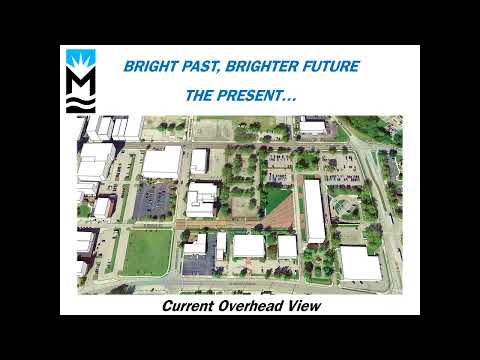
Staff presented an existing boundary for the downtown refresh — roughly railroad to the river and Rhineard(s) to First Street — and described several near-term projects meant to support placemaking. The combined sewer overflow (CSO) basin across from the city building is about 2.5 acres and is designed to hold roughly 5,100,000 gallons; officials said basin construction is expected to finish by the end of this year and that a “park-like” setting atop the basin is targeted for completion next year. The city also noted a recent EV-charging infrastructure project, about $1.5 million and paid with an OKI grant, with two DC fast-charger-ready spaces in a downtown lot behind the Bridal Moon and roughly five Level 2 chargers planned in the south lot at the city building.
Moreland described existing incentive and program districts that shape redevelopment options: a community reinvestment area (CRA), the designated outdoor refreshment area (DORA) — currently about 17 licensed establishments from Clark Street to the riverfront — and an entertainment district. Staff also briefed the room on vacant-property legislation, saying enforcement has been uneven and that legal staff are reviewing neighboring municipalities and state requirements to tighten the city’s approach.
Staff signaled a preference for a request-for-qualifications (RFQ) process to solicit developers. Moreland said an RFQ would allow proposals that emphasize creative placemaking and mixed uses gathered from public input; the city could later issue a request-for-proposals (RFP) if an outcomes-based procurement is preferred.
Residents and business owners urged the city to protect historic character while improving safety, lighting, parking and routine maintenance. Lisa, owner of Iron Rose Mercantile, summarized customer feedback: “Most of the feedback I'm getting from my customers is they want more, as in shopping.” Jamie, a Central Avenue business owner who said she also bought a nearby house, pressed for consistent enforcement and better maintenance, saying she finds needles and other trash outside her building and that “if we're held to a standard, everybody should be held to a standard.”
Speakers representing clergy, neighborhood nonprofits and university partners urged planning that includes services for unhoused residents rather than simple displacement. Scott, a minister at Crosspointe Church of Christ, described local faith-based efforts and urged partnerships that combine affordable housing and supportive services. Yvette Kelly Fields of Miami University said the campus and city have renewed partnerships — including a program that allows Middletown High School students to begin degrees at the Middletown campus — and offered students and faculty as a resource for implementation.
Other public comments pressed for near-term “wins” that signal execution to developers, better marketing to change Middletown’s image and a coordinated block-by-block public–private strategy. “If we’re not capable of executing, that development environment will not come here,” a longtime downtown advocate said.
Next steps staff described: collect written and board input from the two public sessions, publish consolidated answers in the coming weeks, consider forming advisory committees and structure an RFQ that reflects public priorities. Officials asked attendees to sign up for potential committees and said staff will continue outreach.
The town hall was part of the city’s public engagement for a larger downtown revitalization plan. Staff emphasized that specific redevelopment proposals and any formal agreements with developers would return to city council for review and vote.
Residents and stakeholders who want to review the display boards or submit comments were directed to the picture boards and a survey drop box in the hallway; staff said they will publish a summary of findings and next steps online once consolidated.