Get Full Government Meeting Transcripts, Videos, & Alerts Forever!
Get email alerts on the School Facilities topic
No spam. Unsubscribe anytime.
Architects present districtwide facilities assessment; board told plan is a "playbook" for repairs
Summary
USA Architects presented a districtwide feasibility and long‑range facilities report to the Vernon Township Board of Education on April 16, outlining roof, fire‑alarm and accessibility priorities across six schools and asking the board to authorize submission of the long‑range plan to the state.
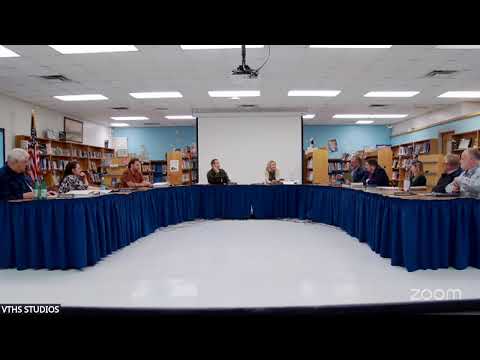
Pete Camposano of USA Architects presented a districtwide feasibility study and long‑range facilities assessment to the Vernon Township Board of Education during its April 16 public meeting, summarizing building‑by‑building observations and recommended next steps.
The presentation, delivered to the full board and the public, laid out priorities the firm identified after touring the district's six school facilities, reviewing plans and meeting with principals and the facilities director. Camposano described the report as "a playbook. It's a living document. It's your plan of action," and urged the board and administration to use it to sequence repairs rather than react to failures.
The report groups needs into categories such as building envelope (roofs, walls, windows), life‑safety systems (fire alarms, emergency lighting, public address), accessibility (toilet rooms, elevators), site circulation and security hardware. Camposano flagged roofing issues across multiple buildings as the district's most pressing item, citing ponding, multiple overlapping roof layers and flashing problems that accelerate deterioration. He estimated the magnitude of identified work across the six buildings at about $100,000,000, while clarifying that the report provides order‑of‑magnitude estimates, not detailed bid pricing.
Board members and staff pressed for specifics. Facilities director Joe Van Kirk and Camposano discussed roof warranties and previous repairs; Camposano noted some roofs still have an active warranty on the top membrane but said associated flashings and rooftop curbs often are not covered. Camposano and board members also discussed repeated use of spray‑foam roof overlays and whether existing assemblies exceed the two‑layer maximum allowed by the International Building Code as adopted in New Jersey.
The study highlights other recurring concerns: aging fire‑alarm and public‑address systems (some components described as nearing the end of useful life), classroom and restroom finishes that impede cleanliness and accessibility, HVAC units reacting with masonry where condensate is not properly resolved, and outdated keying hardware that produces large sets of keys for custodial staff. On special education, Camposano noted rising demand for smaller instructional spaces and recommended lower‑cost interior reconfigurations or targeted partitions where appropriate.
Camposano said the report includes a per‑school section with observations, mechanical/electrical/plumbing notes and “magnitudes” of cost (rough bands such as $10,000 / $100,000 / $1,000,000). He described the next procedural step as a simple board resolution authorizing the architect and business administrator to submit the district's long‑range facility plan to the New Jersey Department of Education for review and certification.
Board members asked about financing options and timing. Camposano discussed typical pathways — annual capital budgeting, staged projects, or a capital referendum paired with potential state reimbursement — and advised that core remediation (for example, full roof replacements) generally requires core sampling and further tests that would be part of a later design phase. On costs and scheduling he said: "You don't need to spend $100 million today — priorities and phasing matter." A later exchange between board members and district staff underlined that some projects could be eligible for partial state reimbursement.
Documents and images tied to the report are available to the public; Camposano said the firm will work with administration to refine cost estimates if the board asks for additional study. He closed by asking the board to consider the pro forma resolution needed to file the long‑range plan with Trenton so the district can move toward state certification.
The board did not take final, binding action on a capital program at the April 16 meeting beyond the procedural discussion about submitting the long‑range plan, but district staff later brought separate contract and funding items to the board for vote during the same session.