Get Full Government Meeting Transcripts, Videos, & Alerts Forever!
Get email alerts on the Parking Restrictions topic
No spam. Unsubscribe anytime.
Fall River traffic board approves no‑parking zone at Blossom/Indiantown fork after residents cite safety and illegal activity
Summary
After residents described congestion, drug paraphernalia and safety risks for children at a forked intersection on Blossom and Indiantown roads, the Fall River Traffic & Parking Board voted to request no‑parking signs for the wedge area; the signs must still clear ordinance and city council review before enforcement.
The Fall River Traffic & Parking Board voted to seek no‑parking signs for the triangular (“wedge”) intersection at Blossom Road and Indiantown Road after residents described repeated illegal parking, litter and safety risks for children waiting at a nearby bus stop.
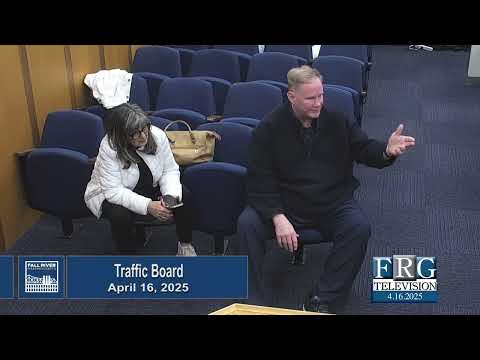
Residents asked the board to restrict parking on both sides of the forked roadway from the fork to just before the first residential properties. Erin Parasy, who gave a Blossom Road address and said her high‑school‑age son uses the Diamond bus stop there, told the board: "My child's bus stop for high school is at that fork intersection." Parasy and other neighbors described parked vehicles narrowing the travel lane, people sitting in vehicles for long periods, and items left on the roadside including bottles, needles and condoms.
A board member responding to photos and descriptions warned that blocking emergency access was already illegal. "It is already illegal. Just because you could park on the roadway, you can never block those fire gates," the member said during the meeting.
Traffic staff recommended a targeted restriction rather than a full closure of public access. The board discussed an on‑site visit; a motion to do an inspection at the location failed after at least two members opposed the measure, and the board instead voted to direct staff to move the no‑parking proposal forward. The board approved placing no‑parking signage on the wedge on both Blossom and Indiantown roads and to mirror the limits on the interior and exterior sides of the triangle.
Board members and staff emphasized process limits: the signs cannot be enforced until the Traffic Board’s recommendation becomes an ordinance and the city council approves it. Traffic staff told residents the typical implementation timeline is about 12 weeks from approval because of the ordinance and council steps; staff said the signs could be installed sooner but would not be legally enforceable until after the ordinance process.
Residents also raised related issues including limited street lighting, erosion at the roadside, and use of the adjacent watershed and trails. Paul Hart, another resident who said he had visited the area to document conditions, described visitors parking on shoulders and walking to the woods and water. Board members said environmental police and other officers have observed vehicles parked on the shoulders and that additional enforcement patrols can help, but that sign posting is intended as a deterrent.
The board framed the decision as a balance between maintaining public access to the reservation and addressing safety. A traffic official said the approved signs are intended to reduce situations that force children or others into the travel lane when they walk around parked cars.
Next steps: Traffic staff will prepare the ordinance language and present it to the ordinance committee and city council for final approval; residents were told to continue reporting violations to public safety while the ordinance moves through the approval process.
Residents and staff expressed interest in revisiting the area if the signs do not reduce the documented safety and nuisance issues.