Get Full Government Meeting Transcripts, Videos, & Alerts Forever!
Get email alerts on the Stormwater And Environment topic
No spam. Unsubscribe anytime.
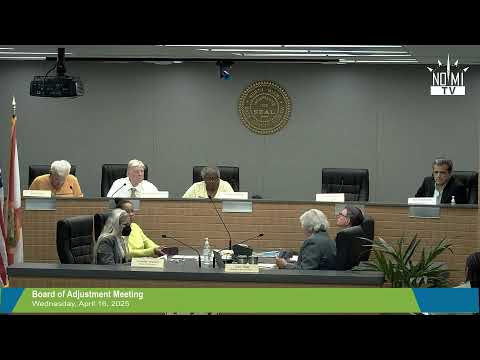
Board denies variance for impermeable paving at 13507 NE 20th 4th Place
Summary
The board unanimously denied an after‑the‑fact variance to allow impermeable paving to remain at the townhouse property, citing stormwater and code‑compliance concerns and directing the owner to remove the portion encroaching into the required five‑foot paving setback.
The City of North Miami board voted unanimously to deny an after‑the‑fact variance requested for 13507 Northeast 20th 4th Place that would have allowed impermeable paving to remain at the property where a five‑foot paving setback is required.
Staff told the board the work was performed without an approved building permit after a 2020 building‑permit submittal had been denied for encroaching into the 5‑foot paving setback established to retain stormwater on private property. "Approving this variance now would set precedence," a staff presenter said, warning that applicants could build after permit denial and then seek retroactive approval.
The property owner, Craig Jarrett, said he had sought guidance in 2019 from city staff and former building officials and had been told some work would not require a permit if it was adjusted; he said the contractor left before completion and that stamped concrete was chosen for perceived permeability and safety. Neighbors spoke at the hearing: one property manager expressed concern about flood risk and supported staff; a nearby resident praised the owner’s aesthetic improvements.
City staff and the building official explained that the concrete paving currently covers most of the lot and limits stormwater percolation, and that county flood‑control requirements and a new county ordinance increasing stormwater retention expectations make the standard important. Staff said the owner could comply without a full variance by removing the paved area that intrudes into the required five‑foot setback and then obtain the proper permits. The building official also noted the structure (bench/planter) likely requires engineered plans.
After discussion, the board moved to deny the variance. The chair and board members stressed the city's need to enforce paving setbacks to prevent localized flooding, and staff offered to expedite the permitting process if the owner removes the noncompliant paving and submits required structural documentation.
The practical next step for the owner is to remove the impermeable material extending into the five‑foot setback, restore pervious surface as required, obtain any structural or engineering signoffs for planters or benches, and then seek permits through the building department.