Get Full Government Meeting Transcripts, Videos, & Alerts Forever!
Get email alerts on the Public Safety topic
No spam. Unsubscribe anytime.
Orinda police chief gives first annual update; council and residents discuss expanding license-plate readers
Summary
Orinda Police Chief Rossi gave his first annual update to the City Council on April 15, reporting steady declines in several property-crime categories, average 911 response times of about 4½–5½ minutes and staffing constraints at county dispatch. Councilmembers and residents pressed staff for more detail on license-plate reader cameras and agreed to consider an expansion plan at the May 6 meeting.
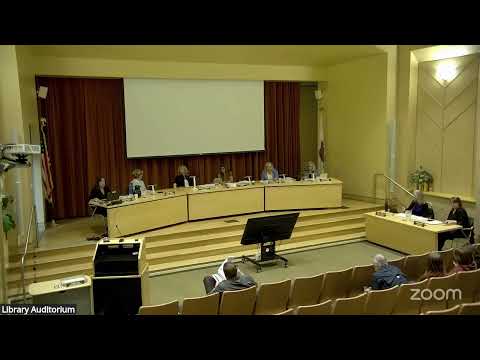
Orinda City Council heard an annual update from Police Chief Rossi on April 15 and discussed the city's existing license-plate reader (LPR) cameras and a resident request to expand the network.
Chief Rossi, presenting his first annual report as chief of police, said Orinda’s patrol staffing includes two sergeants, one detective, one traffic officer and eight patrol officers (including a reserve), with a current vacancy for a senior administrative assistant. He noted two recently hired officers, “Officer Mason Grossman” and “Officer Jordan Baker,” and described a series of community outreach programs including school visits, a toy drive and National Night Out.
Rossi said Orinda’s response metrics are favorable for a community of its size: the average interval between a 911 call and officer arrival is “anywhere from 4 and a half minutes to 5 and a half minutes,” he told the council. He attributed occasional long delays to callers routed to other dispatch centers because of cell-tower handoffs, and to county-wide dispatcher staffing shortages. “They are very short staffed right now, they’re working at 30% of where they need to be,” Rossi said of the county dispatch operation.
On enforcement trends the chief said property-crime categories such as residential, commercial and auto burglaries have trended downward over the past several years and credited proactive policing and interagency work on organized burglary crews. He described the department’s vehicle and body cameras, license-plate reader systems and other investigative tools and encouraged residents to report suspicious activity: “Officers can't be everywhere at once, so if you see something, please call us.”
Public comment reinforced interest in technical tools for safety. A resident, Evan Dreyer, who earlier said his home had been victimized, told council he supports expanding the LPR network and praised a private provider his neighborhood used. Dreyer asked that the council approve staff’s recommendation to add 15 more cameras and noted some private installations already operating in neighborhoods. The council agreed to take up the LPR expansion as a separate agenda item at its May 6 meeting rather than deciding the issue at this session.
Council members asked for clarification about dispatch handoffs and about the coverage and durability of LPR and other cameras. Rossi said the city currently operates nine stationary cameras and referenced “approximately 11” privately owned cameras that have provided footage to police, and that the department is evaluating additional placements and the technology’s ability to assist evacuations.
Why it matters: the presentation highlighted the limits of local authority (dispatch is county-run), the department’s current staffing profile and the practical tradeoffs the council will face if it considers funding more LPR infrastructure. Expanding cameras requires decisions about placement, procurement, and ongoing operating costs, and residents have already begun private deployments in some neighborhoods.
What’s next: the council continued the formal LPR agenda item to May 6 for a full staff presentation and possible vote. Chief Rossi and city staff indicated they will work on a briefing that includes placement options, cost estimates and privacy/operations policies.
Quotes and attributions above come from the meeting transcript; the first reference to council members and staff uses their full titles when available.