Get Full Government Meeting Transcripts, Videos, & Alerts Forever!
Get email alerts on the Crypto Atms Consumer Protection topic
No spam. Unsubscribe anytime.
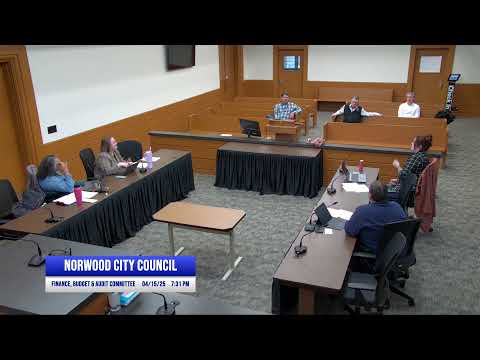
Norwood discusses limits, signage or moratorium on cash‑to‑crypto ATMs to curb scams
Summary
Committee members debated measures to reduce losses from scams that use cash‑to‑crypto ATMs, including possible moratoria on new kiosks, required local warnings or daily limits for first‑time users, and outreach to state agencies and AARP for model language.
Norwood’s Law & Safety Committee discussed curbing scams tied to cash‑to‑crypto kiosks — commonly called Bitcoin or virtual‑currency ATMs — and asked staff to research options including a temporary moratorium on new kiosks, mandatory on‑site warnings and outreach to state regulators or consumer groups for model language.
A council presenter said scams often target older residents who are pressured into depositing cash at a kiosk and stressed that modest transaction limits or step‑up warnings could block the largest losses. “I would rather us try something than do nothing,” the presenter said, citing examples from Vermont and Minnesota and AARP guidance recommending daily limits and first‑time user caps.
Police and staff said the point of deposit is usually too late to recover funds; Lieutenant Kelly Garner told the committee, “If they get to the ATM point, it’s too late.” Staff and council members described cases elsewhere — one cited Stillwater, Minnesota, where police reported multiple virtual‑currency scam reports and tens of thousands in local losses — and noted Ohio’s Department of Commerce maintains a registration list of cryptocurrency kiosk operators.
Options discussed included (1) a moratorium on new cash‑to‑crypto kiosks while the city studies local authority and enforcement mechanisms; (2) requiring kiosks to display a standardized scam‑warning sticker and on‑screen warnings tailored to immediate fraud risks; and (3) outreach to AARP and state regulators for model rules such as daily limits for first‑time users or mandatory refund windows used in some jurisdictions. Committee members also discussed whether the city could distinguish commercial users and press vs. private transactions and expressed skepticism about local ability to enforce transaction‑level financial controls.
The committee agreed to place the item on a future law committee agenda, asked staff to investigate statutory preemption and enforcement options, and to look for existing model ordinances and education materials. Council members suggested a short‑term moratorium and required warning signage could be bundled into a single ordinance if state preemption does not prevent local action.
Background: speakers referenced AARP materials and laws in Vermont and Minnesota that limit daily transaction amounts or cap new customers’ purchase size; they noted registration of kiosks with the Ohio Department of Commerce but said the lack of FDIC‑style protections for crypto means victims commonly cannot recover funds without specialized investigation.