Get Full Government Meeting Transcripts, Videos, & Alerts Forever!
Get email alerts on the Zoning Impermeable Surfaces topic
No spam. Unsubscribe anytime.
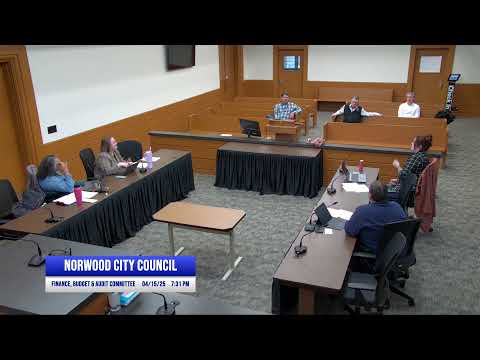
Norwood councilors ask planning commission to study 50% cap on impermeable surfaces in residential lots
Summary
Council members discussed limiting impermeable surfaces (driveways, paved backyards) in residential zones to reduce stormwater and neighborhood flooding, and agreed to refer the concept to the planning commission for study and recommended language.
Norwood councilors asked the city’s planning commission to study limits on impermeable surfaces in residential lots after council members described large paved backyards in student‑housing areas and older blocks as contributing to local flooding concerns.
Councilmember Franzen (presenting the item) told colleagues she reviewed other municipalities’ ordinances and suggested a 50 percent maximum for the whole lot as a starting point. “My kind of suggestion was like 50%,” she said, explaining that percentages used elsewhere for similar cities ranged from about 40 to 60 percent.
Speakers said the rule would be aimed at residential zoning categories — R‑1, R‑2 and R‑3 — and would not apply to commercial or industrial parcels with large parking lots. The committee discussed whether a cap should apply only on new permits or be retroactive; staff and the planning commission president recommended starting with new and replacement permits and said a zoning‑code amendment would require public hearings and typically take several months. “You take it — it’s at least 3 or 4. If you’re going as fast as you possibly can, it’s 3 or 4 months,” the planning commission president said, adding that the total process often approaches six months because of drafting and hearing schedules.
The committee agreed to send a council resolution referring the matter to the planning commission and to ask planning staff to propose specific definitions (pervious vs. impervious, treatment of pavers and decorative stone) and enforcement approaches (building‑permit review and post‑installation inspections). Officials noted Norwood’s residential code previously included a backyard paving limit that was removed during a comprehensive residential zoning rewrite roughly 10–15 years ago; the committee asked planning staff to include that history in their report.
Next steps: committee members requested proposed language and impact analysis from planning staff, with particular attention to student‑housing areas and parcel sizes. The planning commission will hold public hearings before sending any zoning amendment back to council.