Get Full Government Meeting Transcripts, Videos, & Alerts Forever!
Get email alerts on the County Budget Wages topic
No spam. Unsubscribe anytime.
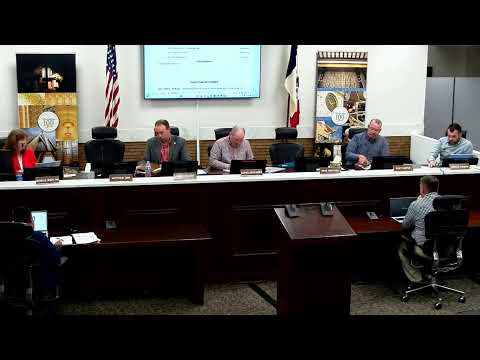
Woodbury County approves 3% wage increase, union contracts and equipment purchases amid budget shortfall
Summary
The Woodbury County Board of Supervisors approved a 3% across‑the‑board wage increase for fiscal 2026 and a package of related staffing and budget actions, while staff detailed a multi‑million dollar shortfall and contingency steps to cover two months of operations.
The Woodbury County Board of Supervisors voted to approve a 3% across‑the‑board wage increase for fiscal year 2026 and several related budget and staffing measures during a regularly scheduled meeting. The board also approved union contract actions, the purchase of squad‑car tablets for deputies, and authorization for an additional sergeant in the sheriff’s office.
The wage decision came as County Auditor Michelle Scapp and department leaders briefed supervisors on the county’s projected reserves and staffing needs. Scapp told the board that, as currently proposed, the county faces roughly a $2.1 million shortfall across funds and will need about $414,000 more to preserve two months of operating funds at the end of fiscal 2026.
Why it matters: Supervisors said the pay decision recognizes county employees’ workload and recruitment pressures but acknowledged the board must make additional cuts or find new revenue before next year to avoid drawing down reserves long term.
Board discussion centered on recruitment and revenue. Sheriff Chad Sheehan told the board federal inmate revenue is exceeding the original budget estimate and said that if current numbers hold, county receipts tied to housing federal inmates could be substantially higher than budgeted for FY26; combining current‑year receipts with projected FY26 receipts, Sheehan said the county could see roughly three‑quarters of a million dollars more than anticipated. Woodbury County Attorney James Loomis urged the board to keep the 3% increase as budgeted, saying it would reward work already done. Melissa Thomas, the county’s HR director, warned that withholding raises would raise turnover and increase recruitment and training costs.
The board also voted on a package of related actions the same night. Those included approving a three‑year collective bargaining agreement with CWA Local 7177 covering civilian jailers, a wage reopener for deputy sheriffs, authorization to hire an extra sergeant to cover a one‑year military deployment, and a purchase of new squad‑car tablets to avoid an October network cutoff.
Quotes: "If we just maintain where we're at right now, that revenue increase will be" higher than budgeted and "we're 2 months, 2 and a half months ahead of the start of the fiscal year," Sheriff Chad Sheehan told the board when describing federal inmate revenue. County Attorney James Loomis said, "I'd ask the board to keep the 3% in the budget." HR Director Melissa Thomas said, "When staff is not compensated... they might start looking for new jobs. Recruitment costs money. New training costs money."
Votes at a glance - Wage plan: Motion to approve a 3% wage increase for fiscal 2026 (motion by Bittinger; second by Nelson). Outcome: approved, vote recorded four‑zero. - CWA Local 7177 (civilian jailers) collective bargaining agreement (three years, wages restructured on a 6% basis in year 1; wage reopeners in years 2 and 3): approved, vote recorded three‑zero. - CWA Local 7177 deputy sheriffs wage reopener (one year; 5%): approved, vote recorded three‑zero. - Additional sergeant in sheriff’s office to cover a one‑year military deployment: approved, vote recorded three‑zero. - Workers’ Compensation High‑Level Risk Management Action Plan agreement with the insurer (IMWCA): approved, vote recorded three‑zero. Board discussion noted the county faces a workers’ compensation premium increase that the auditor (Michelle Scapp) identified as approximately $160,000 in increased premium this year. - Squad‑car tablets: purchase of 22 (quoted as 22–23 during discussion) tablets for the sheriff’s office at $85,234.38 from gaming funds: approved, vote recorded four‑zero. - Increase in projected inmate revenue: motion to increase the budgeted federal inmate revenue estimate by $600,000: approved, vote recorded four‑zero.
Details and context: Auditor Michelle Scapp walked supervisors through budget scenarios. She said a combination of adjustments already made and proposed budget moves could leave the county with a roughly $2.1 million gap between revenues and expenses across funds unless reserves are used or further cuts/revenues are identified. Scapp quantified one planning metric: to have two months of operating funds available at the end of FY26 the county had an estimated shortfall of about $414,000 under current expense assumptions. Scapp also noted an error that had placed a workers’ compensation liability amount in the wrong fund and said the number would be corrected to reflect a roughly $160,000 premium impact in a supplemental fund.
Supervisors and department leaders argued the 3% increase would help recruitment and retention in hard‑to‑fill roles such as jail staff and secondary roads. Michael Andreessen, district 5 foreman in secondary roads, and Dan Heisel, conservation director, urged supervisors to keep the scheduled wage increases for staff who worked long response hours during recent storms. Sheriff Sheehan told supervisors recent increases in federal inmate counts and reimbursements had improved the sheriff’s office revenue outlook for FY26 compared with the amount that was originally budgeted.
What’s next: Supervisors said they will continue budget work over the summer and fall to identify cuts or revenue options to avoid drawing reserves below target levels next year. The wage action and the other votes passed carry into FY26 budget documents and will be reflected in the final budget adopted before certification deadlines.
Ending: The board completed other routine business in the same meeting; multiple supervisors said they expect more detailed follow‑up work on staffing, departmental reserves and potential legislative impacts on county funding over the next months.