Get Full Government Meeting Transcripts, Videos, & Alerts Forever!
Get email alerts on the Gaming Regulation topic
No spam. Unsubscribe anytime.
Committee reviews wide-ranging updates to charitable gaming law, including electronic pull tabs
Summary
Senate Bill 170 would modernize Alaska’s charitable gaming statutes to permit regulated electronic pull tabs, change reporting and licensing rules, add vendor and manufacturer restrictions, and set payout and annual limits. Committee staff presented an extensive sectional; sponsors said rising paper costs are squeezing charities’ fundraising.
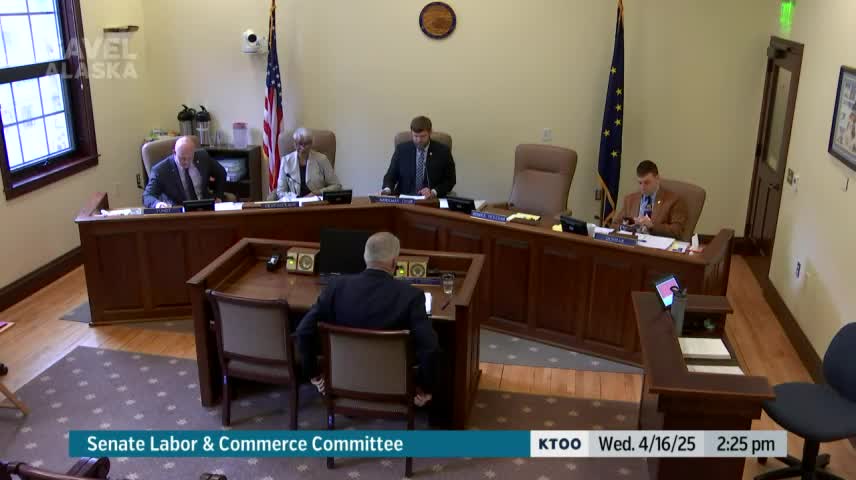
The Senate Labor and Commerce Committee on April 16 received a detailed sectional review of Senate Bill 170, a broad rewrite of Alaska’s charitable gaming statutes that would authorize regulated electronic pull tabs and change licensing, reporting, and prize‑limit rules for operators, distributors, manufacturers, vendors and permittees.
Conrad Jackson, staff to the committee, summarized the bill’s many provisions and said the measure grew from several years of stakeholder work and a similar administration bill considered in the prior legislature. “The issues that have arisen to cause the need for this bill are, very simply, the cost of a paper pull tab has increased 4 to sometimes 5 times,” Jackson said, and that change has reduced charities’ margins on traditional paper pull‑tab fundraising.
Nut graf: SB 170 would permit electronic pull tabs under a new endorsement structure, set limits and reporting requirements for electronic games, and change distribution and vendor rules; it also includes limits on gifts and exclusivity for manufacturers and distributors and establishes a $4 million annual cap for electronic pull tab revenue per municipality or qualified organization unless the department raises the cap by regulation.
Key changes summarized by staff include: adding electronic pull tabs to authorized gaming activities; requiring separate endorsements and independent testing for manufacturers and distributors of electronic systems; prohibiting manufacturers and distributors from holding cross‑interests in each other; setting a 35% cap on fees and payouts from electronic pull tab gross receipts; capping annual electronic pull tab receipts at $4,000,000 for a municipality or qualified organization (with a similar per‑holder calculation for multiple beneficiary permits); a limit of one tablet in play per six occupants at a premises unless the department adopts other limits; and a maximum of 15,000 tickets for an electronic pull tab game.
The bill would also relax some existing notice and contract submission methods by allowing electronic submissions and electronic funds transfers; it would add vendor and permittee pooling and monthly percentage distributions; and it would create new prohibitions on gifts (commonly $250 per calendar year caps) from manufacturers and distributors to operators, permittees or their employees. The draft would prohibit use of visuals that mimic slot‑machine spinning reels and bar the linking of paper pull‑tab availability or price to electronic pull tab systems.
The measure contains staggered effective dates: most provisions would take effect January 1, 2026; the repeal of a requirement that electronic operators have three years’ prior experience would take effect January 1, 2031. Jackson said the department would be responsible for some notification and publicly posting of license suspensions and revocations via a state portal (for example, MyAlaska). The sectional also removes several statutory cross‑references and repeals rules tied to older practices to allow fresh regulation of electronic games.
Committee members asked for the draft legislation to be posted and for clearer, plain‑language definitions for some statutory terms. Senator Dunbar asked whether archaic legal terms such as “consanguinity” might be replaced with more accessible language like “blood relative.”
The committee set SB 170 aside for further consideration and invited additional stakeholder testimony at a future meeting.
Ending: Sponsor and staff said they will return with invited testimony and a posted draft showing line‑by‑line changes; no final committee action was taken on April 16.