Get Full Government Meeting Transcripts, Videos, & Alerts Forever!
Get email alerts on the Large Lot Incentives topic
No spam. Unsubscribe anytime.
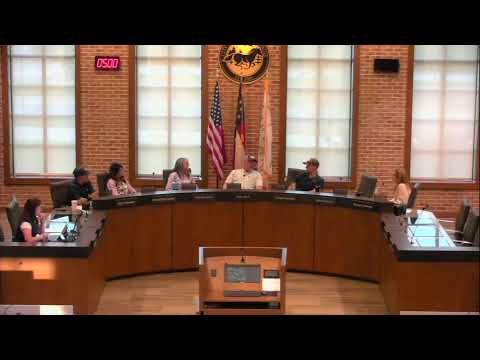
Milton equestrian committee reviews large-lot incentives: accessory buildings, stormwater credits, covered arenas
Summary
The Milton Equestrian Committee on April 16 discussed staff proposals to preserve large lots through zoning incentives, including a distinct local farm category, relaxed rules for some accessory structures on larger properties, stormwater credits and changes to permitting for covered riding arenas.
The Milton Equestrian Committee on April 16 discussed a range of proposals aimed at incentivizing preservation of large lots in Milton, focusing on how zoning and permitting could be adjusted to support equestrian uses while limiting impacts on neighbors.
Diana Wheeler, interim community development director, told the committee the city’s goal is to compile a thorough set of potential incentives to present to the City Council for consideration. “The purpose of this discussion is to try to come up with the very best ideas that we can collectively to incentivize the preservation of large lots,” Wheeler said.
Committee members and residents weighed several staff ideas. Staff suggested establishing a distinct local farm-use category to recognize Milton’s small-scale equestrian properties rather than grouping them with large commercial agricultural operations elsewhere in the state. Wheeler said the alternative designation would be intended to distinguish Milton properties from “large production agricultural industry” and to allow tailored local incentives.
The committee spent substantial time on accessory structures. Staff proposed making certain accessory buildings easier to site on larger properties — for example, allowing run-in sheds, utility-type sheds and barns in front yards where necessary for farm operations, and simplifying administrative approvals for pools and guest structures on lots of three acres or more. Wheeler said the change would reduce the need for lengthy variance or Board of Zoning Appeals processes for larger lots.
Committee members also discussed whether to permit guesthouses in front yards for large properties. Staff floated thresholds such as three acres for some relaxed siting and suggested higher thresholds (for example 10 acres) might be needed to allow more intrusive uses without a public hearing. Members cautioned that a front-yard guesthouse may not be practical on properties that are only three acres in size.
Covered and lighted riding arenas were a separate focus. Under current code, covered riding areas and lighted riding areas each require a use permit for five-acre properties; a covered-and-lighted arena requires a use permit and a minimum of 10 acres. The committee discussed whether the use-permit requirement could be removed for certain acreage thresholds and replaced with design standards (for example recessed, cutoff lighting and a 100-foot setback). Wheeler noted the city could add conditions such as shielded lighting to limit spillover.
Stormwater and pervious/impervious-surface questions arose in connection with arena footing and grading. Committee members asked whether outdoor arenas with sand or compacted footing would be considered impervious; staff answered that treatment depends on construction and that covered structures produce distinct impervious-surface concerns. Wheeler said stormwater credits and special design considerations could be considered as part of an incentive package for larger properties.
Several residents who spoke during public comment emphasized the working nature of local farms and urged caution about new categories. Laura Bentley, a Milton resident who farms in the city, asked the committee not to rebrand working properties in a way that could jeopardize state or county tax programs: “I’m not sure that people that have farms call it a hobby,” she said, adding that Milton has numerous working farms whose owners depend on existing agricultural exemptions.
Committee members agreed on some practical fixes — for example, clarifying that run-in sheds used for transient animal shelter differ from permanent stalls and should be treated differently — while rejecting more complex or confusing new classifications. Several members said they opposed creating an elaborate new “hobby farm” tier that would add complexity for owners.
What’s next: staff will refine these concepts, add clearer definitions and recommended acreage thresholds, and present a consolidated report for Council consideration.