Get Full Government Meeting Transcripts, Videos, & Alerts Forever!
Get email alerts on the Local History topic
No spam. Unsubscribe anytime.
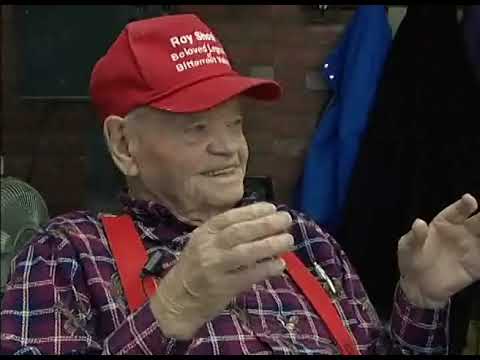
Roy Shook recalls covered-wagon trips to Yellowstone and weeklong journeys to Missoula fair
Summary
Roy Shook, a longtime Bitterroot Valley resident, described traveling as a boy to Yellowstone National Park by covered wagon—camping with livestock, averaging a few miles a day—and later taking weeklong Model T trips to the Missoula fair where horse racing, bronc riding and clowns were main attractions.
Roy Shook, a longtime Bitterroot Valley resident, recalled childhood journeys to Yellowstone National Park and annual trips to the Missoula fair, describing covered-wagon travel, camping with livestock and simpler fair entertainment.
Shook said his family traveled “with a wagon and a cow and chickens,” using the cow for milk and keeping the chickens in crates for eggs. He described slow travel through the prairie—“oh, 3 or 4 miles a day”—and repeated stops to rest horses and livestock. The overland route he described went through the Big Hole country by Wisdom and on toward Dillon, with a stop near what he called “the battlefield” before crossing prairie to the park.
The wagon had no brakes, Shook said, so the party would drag a tree behind the wagon to slow the descent on steep hills. The journeys could take “all summer,” he said, and the family often camped for days at a time along the way. He recalled hunting small game and relying largely on eggs and milk for food while traveling.
Shook described Yellowstone itself as different from today: “Old Faithful was ever hour or so would go off,” and he remembered terraces and springs that appeared more pronounced during his visits. He also recounted seeing grizzly bears in the park’s feeding grounds, saying, “They didn’t bother the people. They stayed pretty well to themselves…they stayed in the feeding grounds,” and that park staff kept bears away from camps.
A later memory, from the motor-vehicle era, recalled a narrow escape when he and his brother Dee rode in the back of a pickup with fish; a bear approached the vehicle and Shook said he hit it with a can to scare it off.
On trips to the Missoula fair, Shook said travel by Model T took about a week and required frequent roadside camping because of the vehicle’s limitations. He described the fair’s attractions as centered on horse races and rodeo events, including bronc riding and other stock competitions, and recalled clowns and home-baked food items such as potato salad, cakes and cookies. He said admission and entertainments were often free in those years and that his son, Rock, performed as a clown at the fair for some time.
Shook offered a reflection on family travel: “We used to go out where the kids could play…and we didn’t have to pay no money to really have entertainment,” citing local swimming and hot-spring spots such as Horse Creek where families camped for a week and children played in the water.
The recollections cover modes of travel, daily life on the road, encounters with wildlife and how regional fairs and park experiences have changed from Shook’s youth to later years.