Get Full Government Meeting Transcripts, Videos, & Alerts Forever!
Get email alerts on the Tax Increment Financing topic
No spam. Unsubscribe anytime.
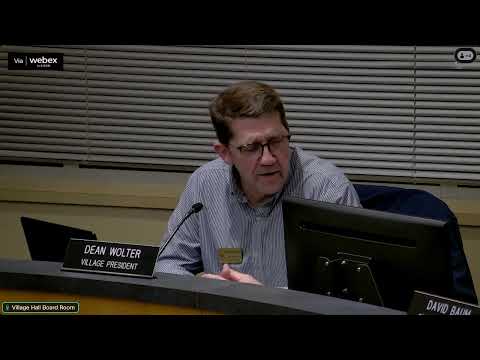
Plan commission forwards TID No. 10 village-center project plan to village board after heated public comment
Summary
After more than an hour of public comment and a consultant presentation, the Germantown Plan Commission voted to approve a resolution establishing boundaries and the project plan for Tax Incremental District No. 10 and forward it to the Village Board for final action.
The Germantown Plan Commission voted April 14 to approve a resolution establishing the boundaries and project plan for Tax Incremental District (TID) No. 10 — the village-center redevelopment proposal — and forward the item to the Village Board for final consideration.
The decision followed more than an hour of public comment and a presentation by finance consultants from Ehlers that addressed residents’ questions about the plan's parcel map, valuation assumptions and a $6 million funding gap identified in the project plan.
Why it matters: The village-owned property at the center of the plan is the primary asset around which redevelopment would be structured. If the Village Board adopts the TID, the district would be used to fund public infrastructure and to negotiate development of a mixed-use village center. Opponents told the commission they are concerned about taxes, density and the process; supporters and village staff said the TID is the mechanism to steer future development and limit private control of village-owned parcels.
Public comment and concerns Residents filled the meeting to comment. Sarah Larson, a nearby resident, urged the commission to investigate conflicts of interest and asked that one trustee recuse himself: “Trustee Baum should recuse himself given that his relationship with Graywolf has not ended because the village has mortgages with Graywolf on the Flower Source and that 1 acre property,” Larson said. Several speakers disputed the TID’s assumptions about how much land qualifies as “in need of rehabilitation,” questioned the project’s financials, and opposed proposed multi-family housing.
Residents pressed three themes in public comment: (1) that the village bought properties before adequate public input, (2) that the TID would enable denser development than the comprehensive plan envisions and (3) that the project plan’s calculations are flawed. Tom Stofficker, a citizen, argued the plan’s rehabilitation percentage cannot be met and said, “It’s impossible to get the 50%. You’re violating the state statutes by doing that.” Melanie Smythe referenced the village’s comprehensive plan and said the village’s stated goal of preserving rural and suburban character appears at odds with the proposal.
Consultant presentation and key numbers Phil Kossen of Ehlers, the consulting firm that prepared the project plan, told commissioners they have three procedural options: approve the plan as prepared, not pass the resolution (which would stop the process), or modify the boundaries and plan before forwarding it. “You really have 3 options as I see it,” Kossen said during his presentation.
Kossen summarized the responses to questions raised at the March 31 public hearing and highlighted several figures included in the project plan: the village’s assessed value for properties it acquired (about $7.8 million), the consultant’s long-term assumption of 2% annual property appreciation used in the district model, and a roughly $6 million financing gap in early phases of the project that the plan treats explicitly as a funding shortfall. Using one scenario in the packet, the report estimated the average Germantown homeowner would pay about $62 annually over the life of a 20-year bond if the village instead borrowed to purchase the land without a TID; a 20-year total impact was shown as about $1,237 per average house in that example.
Bailey Copeland, who has been working on the project and who spoke in the meeting, described the village’s role as an owner: “We are the property owner, we are in the driver's seat of how this moves forward,” she said, noting the village will negotiate terms with developers and that the $2.1 million figure shown for the land sale was a conservative baseline (described in the meeting as a “Bakken number”). Commissioners and consultants repeatedly emphasized the assumptions are preliminary and will change once developers and grant sources are engaged.
Funding and gap-closure options cited in the presentation included developer contributions, brownfield and other state grants through the Wisconsin Department of Natural Resources, WEDC “Vibrant Spaces” grants, Washington County funding, possible levy support, and revenue sharing from other TIDs. Kossen also said that the district’s calculation excludes wetlands when determining the percentage of land considered in need of rehabilitation.
Commission discussion and vote Commissioners pressed the consultants on several assumptions: Trustee Baum asked whether the $2.1 million land value was “clearly a guess right now,” and the consultant and staff said the number was conservative and would be refined once developers negotiate. Commissioners repeatedly noted many inputs remain subject to change — tax rate behavior, interest rates, developer bids and grant awards.
After discussion the commission voted to approve the resolution establishing the boundaries and approving the project plan for TID No. 10 and forward it to the Village Board. The vote was a voice vote; the commission chair announced the motion passed and the item will appear next on the Village Board’s agenda for final action (a date for Village Board consideration was discussed as possibly as soon as next week or on May 5). The commission’s approval authorizes forwarding the plan and the proposed boundaries; it does not obligate the Village Board to adopt them.
What’s next The Village Board will consider the resolution and the project plan at an upcoming meeting. If the Village Board approves the TID, staff and consultants said they will continue outreach to developers and funding partners, refine financial assumptions and negotiate development agreements. Opponents in the room were told they will have another opportunity to speak at the Village Board meeting under public comment.
Ending Commissioners and staff repeatedly cautioned that many numbers in the packet are assumptions subject to change as negotiations and grant applications proceed; both supporters and critics urged further public engagement before final village-board action.