Lifetime Citizen Portal Access — AI Briefings, Alerts & Unlimited Follows
Professor Dan Spencer traces western ideas that shaped modern ecological thinking
Loading...
Summary
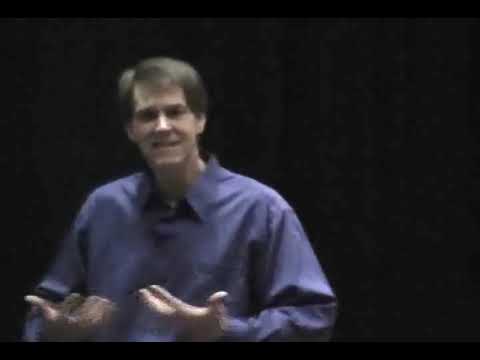
Professor Dan Spencer, a professor at the University of Montana Missoula, used a public lecture in Missoula to outline how Western intellectual traditions — biblical texts, Greek philosophy, the Renaissance and the Enlightenment — shaped modern ecological thinking and environmental ethics.
Professor Dan Spencer, a professor at the University of Montana Missoula, used a public lecture in Missoula to outline how Western intellectual traditions — biblical texts, Greek philosophy, the Renaissance and the Enlightenment — shaped modern ecological thinking and environmental ethics.
Spencer said the ecological perspective treats nature “as a community” rather than a machine and traced how competing ideas about humankind’s place in nature — dominion, stewardship, hierarchy and interdependence — emerged and recombined over centuries. He closed by saying climate change and the global economy will be central tests of whether ecological thinking becomes broadly influential in policy and everyday life.
Why it matters: Spencer argued that the dominant Enlightenment-era metaphors that portray nature as a machine and humans as separate, rational controllers undercut an ecological understanding of interdependence. That, he said, helps explain why many modern social and economic systems do not account for ecological limits. He urged attention to the ethical implications of ecology, invoking Aldo Leopold’s “land ethic” and Rachel Carson’s warnings about pollutants.
Spencer opened by noting the intellectual mix that informs his course work and public talks, reading several short epigraphs (including Lewis Mumford and Larry Rasmussen) to illustrate the underlying claim that “all things in the earth are interrelated and interconnected.” He reviewed three broad historical strands: biblical creation stories that alternate between human stewardship and human distinctiveness; Greek myth and philosophy, which shifted from animate, mythic views of nature to an abstract, often dualistic understanding; and later developments in the Renaissance and Enlightenment that emphasized human potential and scientific control.
On the biblical strand, Spencer highlighted Genesis. He said the first creation account’s command to “subdue” and have “dominion” has been interpreted variously, while a second Genesis account frames humanity’s role as one of tending or “keeping” the garden — language he linked to a stewardship tradition.
Turning to classical thought, Spencer described how pre-Socratic philosophers sought unifying principles (water, air, change, numbers, atoms), and how Plato’s emphasis on eternal forms and Aristotle’s systematic natural observation produced different kinds of separation between humans and nature. He said those strands fed into Christianity’s “great chain of being,” a hierarchical view that has historically ranked humans above animals and plants.
Spencer singled out minority countervailing voices within those traditions. He noted Saint Francis of Assisi’s stress on kinship with animals and nature, and later Romantic writers such as William Wordsworth, Emerson and Henry David Thoreau, who reacted against industrial-era mechanistic images of nature and emphasized interdependence, sensation and imagination.
Spencer identified key scientific and intellectual turning points: Charles Darwin’s theory of evolution and the idea of “deep time,” which, he said, contributed to a view of life as interconnected across both space and time; Ernst Haeckel’s coining of the term “ecology” (1866); and the emergence of ecology as a discipline. He discussed Aldo Leopold’s land ethic as a direct attempt to draw ethical consequences from ecological science and cited Rachel Carson’s writing to emphasize the precautionary principle in dealing with toxins and pollutants.
In the lecture’s closing section, Spencer argued that two contemporary forces make ecological thinking urgent: global climate change, which demands attention to interconnected systems, and the global economy, which increasingly binds distant human communities but often operates without ecological constraints. He called on policy-makers and institutions to integrate ecological perspectives beyond scientific circles and said local examples — including some city-level and regional efforts — show that ecological thinking can inform policy.
Audience members asked about population, capitalism and the compatibility of ecological thinking with non-Western traditions. Spencer said population dynamics are an ecological issue — noting historical links between Darwin and Thomas Malthus — and argued that unchecked growth will meet ecological limits. On capitalism he said traditional capitalism, premised on continual growth, conflicts with ecology’s emphasis on limits, though he acknowledged efforts in “natural capitalism” and biomimicry that attempt to reconcile market mechanisms with ecological design.
Spencer closed by inviting further questions and noting the lecture was part of the series; an event moderator asked the audience to return for a panel discussion the following week.
Spencer characterized the lecture as survey-oriented rather than a partisan argument; he repeatedly framed the material as tracing ideas and their ethical implications rather than endorsing a specific policy change. The talk combined historical overview, intellectual history and brief contemporary commentary, followed by a short audience question-and-answer period.