Get Full Government Meeting Transcripts, Videos, & Alerts Forever!
Get email alerts on the Plato Vs Homer topic
No spam. Unsubscribe anytime.
UM lecturer frames ‘Plato vs. Homer’ as an enduring struggle between myth and reason
Summary
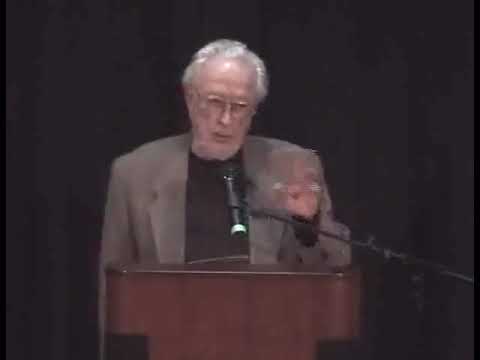
MISSOULA — Ron Perrin, professor emeritus of philosophy and political theory at the University of Montana, told an Alumni Association audience in February that Western thought reflects an enduring tension between two ways of knowing: the mythological, represented by Homer, and the rational, represented by Plato.
MISSOULA — Ron Perrin, professor emeritus of philosophy and political theory at the University of Montana, told an Alumni Association audience in February that Western thought reflects an enduring tension between two ways of knowing: the mythological, represented by Homer, and the rational, represented by Plato.
Perrin said the mythological way of understanding aims to “find meaning in the mysterious,” giving human-like motives to natural forces and embedding events in stories told and retold by a community. “This is a way of finding meaning in the mysterious. The way of finding meaning in that which defies meaning,” Perrin said.
He contrasted that approach with the philosophical project that arose in Ionia in the seventh and sixth centuries B.C., where thinkers such as Thales, Anaximander, Anaximenes, Pythagoras and Heraclitus sought a single unifying principle behind change and diversity. Perrin described the early philosophers’ method as observational, abstracting from particulars to seek what is “constant, permanent, and unchanging in experience,” and said that Plato systematized those efforts into a philosophical program centered on reason.
Perrin summarized Plato’s educational program in the Republic as an effort to turn young people away from the senses and toward abstract thought — particularly mathematics — because Plato believed the mind must grasp eternal forms to govern wisely. Perrin said Plato feared Homeric narratives would “instill in the young an attraction for conflict and deception” and thereby undermine the love of unity and balance Plato saw as essential for rulers.
Tracing the later genealogy of the Platonic emphasis on reason, Perrin discussed the Enlightenment and figures such as Descartes, who he said elevated reason by beginning with systematic doubt and concluding with cogito ergo sum; and Galileo, whose trial before the Inquisition highlighted the clash between faith-based authority and scientific claims. Perrin described Enlightenment thinkers’ view of nature as something to be known and employed: “masters and possessors of nature,” as the era’s rhetoric put it.
Perrin also invoked non-Western and Indigenous perspectives to underline a contrasting view of nature. Citing Chief Seattle’s reported address, he noted a persistent view that the earth “does not belong to man. Man belongs to the earth,” and argued that this outlook more closely resembles Homeric, animate conceptions of nature than the detached posture of scientific mastery.
In the question-and-answer period, audience members drew connections to present-day public life. One attendee asked whether Plato would “dismantle the Internet”; Perrin replied that because the internet appeals strongly to emotion and the senses, “he would banish the Internet along with Homer,” though he added Plato would also try to turn such tools to educational uses. When asked whether the current administration seemed Homeric or Platonic, Perrin said it had elements of both and cautioned against a simplistic categorization.
Perrin closed by urging continued attention to both modes of understanding. He argued that neither the mythic nor the rational approach alone is sufficient to capture some forms of meaning — citing, for example, Abraham Lincoln’s use of the Declaration of Independence in the Gettysburg Address as a civic, mythic frame that complements the Constitution’s rational design. He took several additional questions after the lecture.
The talk was the second offering in the Alumni Association’s “Ways of Knowing” lecture series and ran about 88 minutes, including Q&A. Perrin referenced a wide range of historical thinkers and cultural figures during the talk and identified the contrast between the Homeric and Platonic ways of knowing as a continuing source of cultural and political tension.