Get Full Government Meeting Transcripts, Videos, & Alerts Forever!
Get email alerts on the Governance topic
No spam. Unsubscribe anytime.
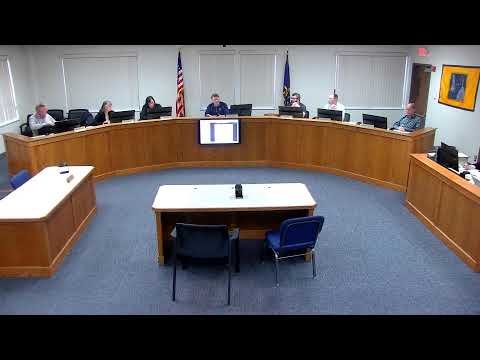
Marshall County Council discusses taking legislative authority, nonprofit reporting and CASA use of restricted opioid funds
Summary
Marcel, the county attorney, told the Marshall County Council on April 14 that the county commissioners have asked the council to consider taking on statutory legislative duties under a county council model and to require nonprofits that receive county funds to report on how the money is used.
Marcel, the county attorney, told the Marshall County Council on April 14 that the county commissioners have asked the council to consider taking on statutory legislative duties under a county council model and to require nonprofits that receive county funds to report on how the money is used.
Marcel said the change would use the county legislative model in Title 36, chapter 3.5 — citing "36-2-3.5-1" by number — and would be implemented by a joint resolution between the commissioners and council. "The commissioners have reached out and asked if the council would be interested in taking over the legislative duties for the county," Marcel said. He added that he and "Sean" would work with the council on drafting language and that an effective date would be selected later.
Why it matters: shifting to a formal legislative-council model would change how ordinances and county policy are developed and could alter the balance of decision-making between the council and the board of commissioners. The council currently serves as the county's fiscal body; adopting legislative authority would add ordinance-making responsibilities and create a formal process for working with commissioners on policy and funding decisions.
Council members asked for additional information and for a draft policy. Marcel said the change would be accomplished by a joint resolution and that "there's gonna have to be a lot of discussion, amongst us as a group and then with the commissioners to see if this is something everybody wants to do." No vote or ordinance was adopted at the April meeting; council members directed staff to prepare draft language and follow up at a future meeting.
On transparency and reporting, Marcel told the council that commissioners have also requested that "all nonprofits that receive government funding from us give us a report on how those funds are used," so the council can increase transparency about how county funds are spent. Marcel said he would draft a proposed reporting policy for the council to review at a future meeting.
The council also heard about a proposal to use restricted opioid-settlement funds to support the Court Appointed Special Advocates (CASA) program. Marcel said the courts had asked the council to consider using some or all of the restricted opioid money "for the CASA program" and that the judge "is asking that we consider using some of or all of the restricted opioid money, for the CASA program." Marcel said Judge Cerise would probably bring a formal request later when numbers are finalized.
Discussion vs. decision: the council treated the three items as discussion and direction to staff. Council members asked for a draft joint-resolution process and for a nonprofit reporting policy to be prepared for a future meeting; they did not adopt legislative authority at this session. No formal appropriation or ordinance regarding the CASA funds or the legislative change was approved on April 14.
Next steps: Marcel will work with commissioners and staff to draft joint-resolution language and a nonprofit reporting policy and return to the council. Judge Cerise is expected to present a formal CASA funding request once courts have finalized figures.