Get Full Government Meeting Transcripts, Videos, & Alerts Forever!
Get email alerts on the Science Evolution topic
No spam. Unsubscribe anytime.
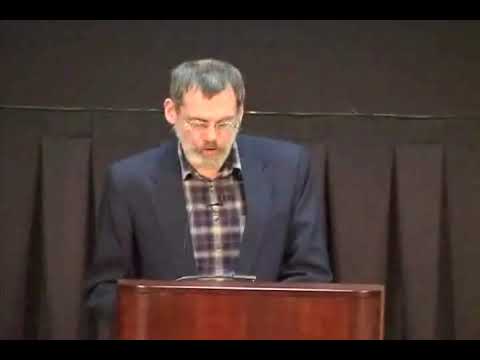
Professor John Glendening frames Darwin as a 'way of knowing' in Missoula lecture
Summary
Professor John Glendening argued that Charles Darwin's theory remains central to how people understand nature, culture and human identity during a lecture in the Honors College "Ways of Knowing" series, using Galápagos examples, Victorian literature and modern evidence to show both the scientific power and cultural controversy of evolution.
Professor John Glendening, a member of the English faculty, delivered a lecture titled "Darwin and Other Apes" as part of the Honors College Ways of Knowing series in Missoula. Glendening traced Darwin's observations in the Galápagos, the development and publication of The Origin of Species, and how Darwinian ideas have shaped Victorian culture, modern science and public controversy.
Glendening told the audience that Darwin's writing "has seeped into and helped fashion the intellectual landscape we occupy today," and argued the topic is particularly useful in a course that examines how people know nature, society, the self and the divine. He said the lecture uses Darwin both as historical context and as a provocation to examine contemporary assumptions.
Glendening emphasized the Galápagos as a natural laboratory for evolutionary observation. He described Darwin's five-week visit aboard HMS Beagle, his later use of those observations in The Origin of Species (1859), and the role of island isolation in producing locally adapted species. Drawing on his own travel with the Honors College to the Galápagos, Glendening highlighted the island examples most often tied to Darwin’s argument: giant tortoises with shell and neck variations across islands and the finches whose beak differences reflect adaptation to ecological niches.
He pointed to long-term fieldwork by Peter and Rosemary Grant on Daphne Major as near-definitive evidence for natural selection in action, saying the Grants’ multi-decade measurements tied weather and habitat changes to measurable shifts in finch morphology. Glendening also quoted from the final paragraph of The Origin, as he read Darwin’s language: "endless forms most beautiful and most wonderful have been and are being evolved." He used that passage to argue that Darwin's account combines a scientific explanation with rhetorical appeals to wonder.
Glendening addressed why Darwinism remains controversial in the United States. He noted that in some Catholic countries and many scientific circles Darwinism is largely uncontroversial, while American public opinion remains divided. He traced a pattern of nineteenth-century religious and moral objections — including that evolution challenges a literal reading of Genesis and that it appears to demote humans from a central, specially created status — and described how those objections resurfaced in later debates about human origins.
Turning to cultural reception, Glendening discussed late Victorian literature that absorbed and contested evolutionary ideas. He cited Bram Stoker’s Dracula and H.G. Wells’s The Time Machine as works that dramatize anxieties about degeneration, struggle and moral implications attributed (rightly or wrongly) to Darwinian thought. He warned against conflating Darwin’s science with later political misuses, noting that some applications labeled "social Darwinism" or eugenics were not straightforward extensions of Darwin’s arguments and in many cases were distortions.
Glendening also sketched the darker dimensions Darwin and others grappled with: variability, contingency, and the prevalence of struggle and extinction in nature. He read a line from a Darwin letter expressing the bleakness he sometimes felt: "what a book a devil’s chaplain might write on the clumsy, wasteful, blundering, low, and horribly cruel works of nature," and used it to illustrate Darwin’s own awareness of suffering in natural processes.
The lecture moved to modern evidence that Glendening said strengthens evolutionary explanations: antibiotic resistance, which he characterized as a clear example of natural selection in microbes; genetic research such as the sequencing of the human genome; and studies of traits like lactose tolerance that tie genetic mutations to cultural practices (domestication and dairying). He stressed that genetic and ecological data have filled many of the empirical gaps critics once cited.
Glendening closed by urging intellectual openness: the study of Darwinian ideas, he said, helps students question assumptions, whether those lead them to strengthen, alter or suspend their prior beliefs. He framed evolution as both a scientific account and, for some, a source of ethical reflection and reverence for interconnection. After the talk he answered audience questions about the global religious reception of evolution, the historical timing of geological and fossil evidence, and the so-called "missing link," reiterating that fossil discoveries have progressively filled earlier gaps.
The lecture was the third in the series; Glendening noted Paul Spruill of the university’s Department of Biology will give a subsequent lecture and referenced recent and upcoming speakers in the series. The event concluded with a question-and-answer period that covered public acceptance of evolution, historical fossil discoveries, and the relationship between cultural change and scientific explanation.