Get Full Government Meeting Transcripts, Videos, & Alerts Forever!
University of Montana professor: Intelligent design fails scientific test
Summary
Professor Paul Spruill told an audience in Missoula that science addresses how the natural world works through testable, falsifiable methods and that intelligent design is not a scientific explanation because it cannot be tested or falsified.
Professor Paul Spruill, a wildlife biologist at the University of Montana, told a packed lecture in Missoula that science is a method for testing how the natural world functions and that intelligent design does not meet the criteria scientists use to establish knowledge.
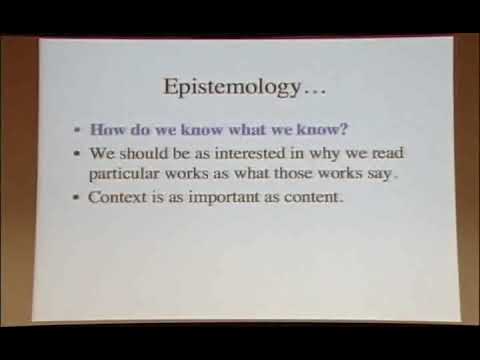
Spruill, speaking as part of the university's Ways of Knowing lecture series, said the scientific process relies on testable hypotheses, repeatable data collection, peer review and the willingness to revise conclusions when new evidence emerges. He argued that intelligent design — the claim that complex biological features require an unspecified “intelligent designer” — cannot be evaluated with those tools. "It fails the test of science because it cannot be falsified," Spruill said.
Spruill referenced a legal definition of science from Judge William Overton’s ruling in McLean v. Arkansas Board of Education, describing science as guided by natural law, empirical, tentative and falsifiable. He explained how peer review works:…
Already have an account? Log in
Subscribe to keep reading
Unlock the rest of this article — and every article on Citizen Portal.
- Unlimited articles
- AI-powered breakdowns of topics, speakers, decisions, and budgets
- Instant alerts when your location has a new meeting
- Follow topics and more locations
- 1,000 AI Insights / month, plus AI Chat