Get Full Government Meeting Transcripts, Videos, & Alerts Forever!
Get email alerts on the Science Education topic
No spam. Unsubscribe anytime.
University of Montana professor: Intelligent design fails scientific test
Summary
Professor Paul Spruill told an audience in Missoula that science addresses how the natural world works through testable, falsifiable methods and that intelligent design is not a scientific explanation because it cannot be tested or falsified.
Professor Paul Spruill, a wildlife biologist at the University of Montana, told a packed lecture in Missoula that science is a method for testing how the natural world functions and that intelligent design does not meet the criteria scientists use to establish knowledge.
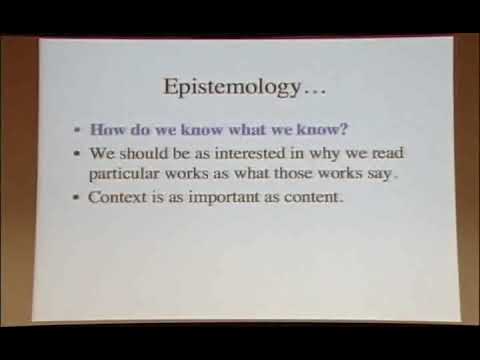
Spruill, speaking as part of the university's Ways of Knowing lecture series, said the scientific process relies on testable hypotheses, repeatable data collection, peer review and the willingness to revise conclusions when new evidence emerges. He argued that intelligent design — the claim that complex biological features require an unspecified “intelligent designer” — cannot be evaluated with those tools. "It fails the test of science because it cannot be falsified," Spruill said.
Spruill referenced a legal definition of science from Judge William Overton’s ruling in McLean v. Arkansas Board of Education, describing science as guided by natural law, empirical, tentative and falsifiable. He explained how peer review works: researchers write a manuscript, methods and raw data are reviewed by other specialists, and journals accept, revise or reject work based on that scrutiny. "If your data seem to support the hypothesis, you don't rest on your laurels," Spruill said, noting that publication invites further testing by the wider scientific community.
To show how scientific claims remain provisional, Spruill cited the debate over Homo floresiensis — a small hominid skull discovered and published in 2003 — where later papers argued the skull might reflect a pathological condition (microcephaly) rather than a distinct dwarf lineage. "We probably aren't going to know the answer to that question until additional bone fragments are found," he said.
Spruill also acknowledged limits and human flaws in science. He pointed to cases of fraud, including a high-profile retraction of fabricated stem-cell results, and to instances where governmental or institutional pressures may suppress findings. He described those as blemishes on the scientific enterprise but noted that public scrutiny and further research eventually exposed the false claims.
On the controversy over teaching intelligent design in schools, Spruill said proponents often avoid naming a deity but that funding for the movement often traces to organizations such as the Discovery Institute in Seattle. He told the audience he believed much of the dispute stems from fundamentalist religious groups that see evolution as a threat to a literal reading of scripture. "I think they believe if you believe in evolution, therefore you must not believe in God, and therefore science is a threat to their way of knowing," he said.
Spruill contrasted scientific questions, which typically ask how processes work and make testable predictions, with moral or value questions — for example whether a person should be told about a genetic test result or whether cyanide leach mining should be permitted. He called the latter questions matters for ethics, law and public policy rather than scientific proof.
He also noted some scientific ideas currently sit at the edge of empirical testability. Using string theory as an example, Spruill said parts of theoretical physics propose ideas that cannot yet be tested with present technology and therefore occupy a different status until empirical evidence can be obtained. "Until we do, this isn't science, it's philosophy," he quoted a physicist as saying about string theory.
The lecture concluded with a question-and-answer session in which audience members raised topics including the difference between belief and knowledge, the role of dogma in science, the so-called god-of-the-gaps criticism, and the cultural reasons some people perceive a conflict between science and religion. Spruill emphasized that science need not aim to displace faith-based ways of knowing: "It's simply a different way of knowing," he said.
The talk was part of the Ways of Knowing series; Spruill invited further questions and provided contact information for follow-up.