Get Full Government Meeting Transcripts, Videos, & Alerts Forever!
Get email alerts on the Higher Education Pedagogy topic
No spam. Unsubscribe anytime.
Honors panel presents "Ways of Knowing" course as interactive, team-taught seminar
Summary
Presenters at a Davidson Honors College panel in Missoula described the team-taught "Ways of Knowing" course as interactive, aimed at first‑semester students, and designed to balance multiple epistemologies through class exercises, dialogue and cross-discipline teaching.
Presenters for the Davidson Honors College lecture series described the team-taught course "Ways of Knowing" as an interactive seminar that introduces students to multiple methods of inquiry and encourages classroom dialogue.
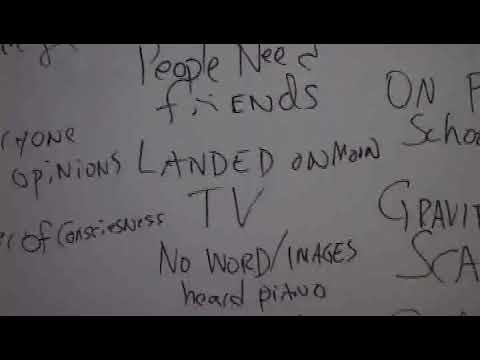
Paul Spruill, a lecture-series presenter, opened the evening exercise and explained how he organized attendees' answers to the prompt “one thing you know to be true and how you know it.” Spruill said, "On the leftmost, we have people who are thinking and knowing because they're thinking," and walked the room through columns that grouped intuitive, perceptual, experiential and language-based ways of knowing.
John Glendening, a lecture-series presenter, described literature's role in the course. He said literature "through the selection and the structuring of language . . . preeminently uses all four of these ways of knowing" and argued that literary study exposes students to imagination, reason, feeling and sense perception in a single medium.
Dan (presenter) and other panelists said the course aims to give students a vocabulary and practice for comparing methods of inquiry. Dan noted a tension the faculty try to address: "as ways of knowing become more specialized . . . it's very, very difficult even in your own discipline . . . to know it all anymore," and the course therefore emphasizes immersion sufficient to recognize different disciplinary modes rather than producing specialists.
Panelists showed several classroom practices they use: a short in-class writing or speaking exercise to surface students' personal epistemologies, pairing faculty across fields for team teaching, and setting norms for civil disagreement so students can "argue ideas, not people," as Dan put it. Panelists said they require students to explain why they hold a belief, not just assert it, and to revisit a first-week assignment at semester's end to track intellectual development.
Presenters also discussed student engagement. Kitty (presenter) and others said the course benefits from small-group discussion and faculty modeling. They described seeing measurable differences in students' critical-writing and willingness to engage after a semester: papers at the end were, they said, substantially different from the early drafts, reflecting clearer connections between experience and reasoned argument.
Panelists and some audience members connected the course to other programs. Laurie (audience) noted students who completed International Baccalaureate programs often arrive having already encountered multiple "ways of knowing." Several presenters said the Davidson course is homegrown to the honors college and is team-taught across literature, science and philosophy.
The panel closed with presenters urging audience members to continue the conversation informally at a wine-and-cheese reception.