Get Full Government Meeting Transcripts, Videos, & Alerts Forever!
Get email alerts on the Sewer Expansion topic
No spam. Unsubscribe anytime.
Malibu council hears wide-ranging public debate on sewers, seawalls and limits on self‑certification
Summary
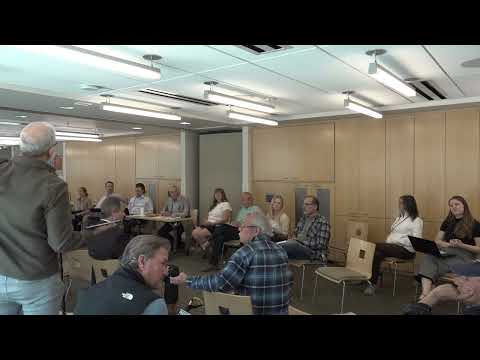
Malibu City Council met in a special session to discuss possible sewer expansions, geotechnical review requirements and the role of self‑certification in rebuilding fire‑destroyed homes along the city’s beachfronts.
Malibu City Council met in a special session to discuss possible sewer expansions, geotechnical review requirements and the role of self‑certification in rebuilding fire‑destroyed homes along the city’s beachfronts.
The council heard detailed technical and policy testimony from engineers, architects and dozens of residents about options including extending wastewater lines to the Civic Center plant, building dedicated package plants, routing flows to Hyperion (Los Angeles), or installing an ocean outfall. City staff was directed to return with cost, schedule and permitting analyses limited to the burn‑area beachfront properties so the council can make a go/no‑go decision.
Why it matters: Council members and many speakers framed the choices as urgent for homeowners who must decide whether to rebuild while permits and insurance remain unresolved. Speakers also warned that sewer work could change development pressures on the coast and that seawall construction — required in many rebuild scenarios — is expensive and raises coastal public‑trust and habitat issues.
City staff summary and options City Infrastructure Manager Robert Butler (staff member) gave an overview of existing capacity and technical paths. “We have a functioning wastewater plant on Civic Center Way. It’s currently designed to treat about 92,000 gallons per day,” Butler said, adding that the plant was built to be expanded and that the city currently disposes treated effluent through injection wells behind the Ralphs shopping center. Butler told the council the plant’s ultimate design capacity can reach roughly 500,000 gallons per day and that extending service to Pacific Coast Highway (PCH) properties could be done by piping and pumping flows to the Civic Center plant, connecting to Hyperion in Los Angeles, building smaller decentralized package plants, or — less commonly discussed — constructing a multi‑mile ocean outfall.
Butler said staff’s initial estimate is that linking beachfront rebuilds to the Civic Center plant is the “quickest and easiest” path but cautioned that disposal capacity and regulatory approvals from the regional water quality control board are limiting factors.
Engineers oppose self‑certification; worry about landslide risk Multiple local geotechnical and structural professionals urged the council not to adopt self‑certification of plan sets for post‑fire rebuilds. Coastal and structural engineer Reg Brown told the council, “I just wanna voice my recommendation that the city council and the city of Malibu does not adopt self certification for these projects,” citing long experience with Big Rock mesa landslide activity. Jay (principal engineering geologist, Land Phases Inc.) said: “I’ve never seen a worse idea than that of self certification of geotechnical reports and plans … This would be an extremely foolish idea in a historically active landslide area.” Both speakers stressed the need for independent peer review of geotechnical reports and plan checks in historically active slide zones.
Public comments: costs, timing and fears about loss of local residents Speakers who lost homes in recent fires gave competing views about sewers versus on‑site advanced wastewater treatment systems (AOWTS). Architect Christopher Sorensen proposed several ideas for a larger strategy including a “phase 3” expansion of the Civic Center facility and storage of treated water for fire suppression; he estimated large, multi‑phase costs but stressed political opportunity after gubernatorial emergency orders. Several beachfront residents said they would welcome a sewer if it reduced per‑household rebuild costs; others said they fear that new sewer access could spur lot consolidation and larger developments on the coast.
Costs and technical numbers mentioned to the council (as stated in public comments and staff remarks): - Civic Center plant: designed for about 92,000 gpd; currently operating near 70,000 gpd; expandable up to roughly 500,000 gpd (Robert Butler, staff member). - Staff estimated remaining available capacity for expansion (after phase 1 connections) in the range of a few hundred thousand gallons per day; precise household allocations still require a parcel‑level analysis by staff. - Multiple public commenters cited ballpark figures: advanced on‑site wastewater systems (AOWTS) and seawalls each were described by speakers as in the low‑to‑mid six‑figure range per property (speaker estimates varied; see clarifying details). - A proposed pipeline serving PCH was described in public comment as about 7.1 miles in length (Christopher Sorensen).
Policy, permitting and financing questions Speakers and council members repeatedly said the schedule and cost — and whether CEQA and coastal permits could be streamlined under disaster declarations or executive orders — would determine if a sewer option is feasible for homeowners who want to rebuild quickly. Several council members asked staff to pursue conversations with the Governor’s Office, the regional water board, Caltrans (for PCH and seawall interactions) and other potential partners.
Geography, seawalls and public‑trust concerns Engineers and longtime residents stressed that seawalls and other shoreline protection measures affect both the stability of homes and the public beach. Multiple speakers warned that seawalls pushed seaward (to protect private septic systems) are costly and that the Coastal Commission and State Lands Commission treat seawalls as problematic because they can accelerate beach loss. Several commenters said building seawalls at the landward edge of PCH would be less expensive than building outboard seawalls protecting individual septic systems.
Council directions and next steps Council members converged on a set of parameters for staff work: focus the initial feasibility study on the burn‑area beachfront residential properties, analyze the five primary technical options (extend service to Civic Center, connect to Hyperion/LA, one or more package plants, ocean outfall, or retain/upgrade on‑site systems), produce estimates of per‑property costs and construction timelines, and identify permitting and financing pathways (assessment or infrastructure financing districts, state and federal grants). Council asked staff to return with a report and options analysis at the council’s April 24 special session.
Quotes from the meeting "I just wanna voice my recommendation that the city council and the city of Malibu does not adopt self certification for these projects," Reg Brown, coastal and structural engineer, said during public comment. "I’ve never seen a worse idea than that of self certification of geotechnical reports and plans," Jay, principal engineering geologist at Land Phases Inc., told the council. "We have a functioning wastewater plant on Civic Center Way. It’s currently designed to treat about 92,000 gallons per day," Robert Butler (staff member) said in a staff overview.
What the council did not decide The council did not adopt or reject a sewer plan at the meeting. No ordinance, zone change or infrastructure funding measure was approved. The meeting produced a direction to staff to analyze options and return with detailed cost, schedule and permitting information limited to the agreed geographic scope.
Ending note Council members and many public speakers framed the choice as urgent for homeowners with fire‑destroyed properties but also warned that technical, regulatory and funding hurdles remain. Staff will return with the requested analyses and the council is scheduled to resume discussion at a special session on April 24.