Get Full Government Meeting Transcripts, Videos, & Alerts Forever!
Get email alerts on the City Budget topic
No spam. Unsubscribe anytime.
Mayor warns SSUT and pension transition could tighten Tuscaloosa budget; outlines seven short-term steps
Summary
The mayor told the Tuscaloosa City Council that sales-tax redistribution under SSUT, softer local sales, tariffs and the planned pension conversion to the Retirement Systems of Alabama could tighten the city’s fiscal picture and outlined seven short-term steps staff will pursue ahead of the fiscal 2026 budget.
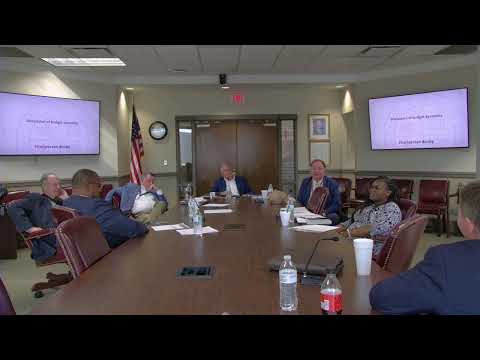
The mayor told the Tuscaloosa City Council during an April 15 discussion that the city faces several fiscal headwinds and outlined seven short-term steps city staff are preparing for the fiscal 2026 budget.
"SSUT is estimated to redistribute to other local governments in Alabama 6.4 percent of the city sales taxes," the mayor said, adding that the city calculates that redistribution will reduce Tuscaloosa's sales-tax receipts by about $14.6 million in the current fiscal year and could exceed $16 million next year. He described that loss as the city’s "greatest threat." The mayor also said a planned transition of police and fire pensions into the Retirement Systems of Alabama (RSA) carries an estimated annual conversion cost the city has bookmarked at $10 million but warned that market valuation changes could increase that to $11 million or $12 million when conversion occurs in fiscal 2027.
Nut graf: The mayor framed the conversation as an early, transparent budget planning session to identify the size and drivers of the shortfall so the council and departments can prepare before formal budget proposals. He said the city’s AAA bond rating and a growing general fund balance provide capacity to meet planned capital and operating obligations, but the combination of SSUT redistribution, softer consumer spending, potential tariffs affecting major exporters, uncertainty about federal research program funding, and the RSA transition require preemptive action.
Most important proposals and context
- Fiscal health: The mayor noted the city’s AAA rating, and the fiscal 2024 audit showed the fund balance rose from $76.4 million to $79.5 million. He said the general fund surplus transfer this year is $19.1 million but that staff expect to have about $14.5–$15 million available to spend after required reserve set-asides.
- SSUT and sales-tax dynamics: The mayor and staff discussed the state’s SSUT (state-collected remote/marketplace sales tax) and how regulatory categorizations of marketplace facilitators and delivery mechanisms can divert sales tax growth away from the city to county or state distributions. City staff said SSUT grew at double-digit rates statewide while local collections decreased; the mayor said local Christmas-period collections fell about 4 percent.
- Pension transition to RSA: The mayor reiterated the city is moving police and fire employees to RSA. City staff had previously budgeted about $10 million annually for the conversion; the mayor cautioned that lower asset valuations could push that figure higher by the time of conversion on Oct. 1, 2026.
- Other liabilities: The mayor listed other large projects and obligations (MLK Phase 3, Northern Riverwalk Phase 2, Belk Center, University Boulevard corridor improvements, and an ENCORE incentive agreement) and said the city’s multi-year planning and a 15% Elevate set-aside for operations and maintenance help manage those commitments.
Short-term measures proposed (seven items described by the mayor)
1) Use attrition to reduce personnel where possible, consolidating duties and avoiding layoffs. 2) Commission a third-party review of staffing levels, asset management and contract oversight to identify efficiencies. 3) Review and consider reducing or eliminating certain city services and events that are not core responsibilities. 4) Evaluate artificial intelligence and other technologies to reduce personnel costs and division expenses. 5) Require major agencies and authorities that receive city funding to take comparable cost-saving measures, including scrutiny of salaries and service delivery. 6) Freeze non–water/sewer capital projects that are still in conceptual phases to preserve longer-term flexibility (water and sewer projects were excluded from this freeze and reported to be in good condition). 7) Continue and intensify city efforts to seek changes to SSUT allocations and state regulatory practice, and to advocate for a fairer distribution of sales tax revenue to local governments and school systems.
Council discussion and caveats
Council members asked clarifying questions during the discussion. One councilmember characterized the $14.6 million figure as "reduced growth" rather than an outright cut to current collections; the mayor and staff agreed that the city’s methodology for estimating the SSUT shortfall has been shared with the Alabama Department of Revenue and was not disputed. The mayor emphasized the presentation was for discussion and that figures could change between now and formal budget adoption: "I planned this session so that we could talk openly. This is not a revelation of things that are planned... This is what we know as of April 15." He proposed an initial target of $5 million to $6 million in general-fund expenditure reductions to prepare for fiscal 2026 while using capital funds for some equipment purchases to avoid increasing operating costs.
No formal budget votes were taken during the meeting; the mayor asked staff to continue analysis and bring recommendations to the council in advance of formal budget hearings. The mayor also encouraged coordinated outreach with other Alabama cities and school boards to press for SSUT reforms and noted the city will present its fiscal picture to credit-rating agencies in an upcoming visit.