Get Full Government Meeting Transcripts, Videos, & Alerts Forever!
Get email alerts on the Data Center Zoning topic
No spam. Unsubscribe anytime.
Port Washington council adopts I-3 'Technology Campus' zoning after contentious public hearing on proposed data center
Summary
The Port Washington Common Council on April 15 adopted an ordinance creating a new I-3 Technology Campus zoning district to allow and regulate possible data‑center or large technology campus development after a public hearing marked by broad resident opposition.
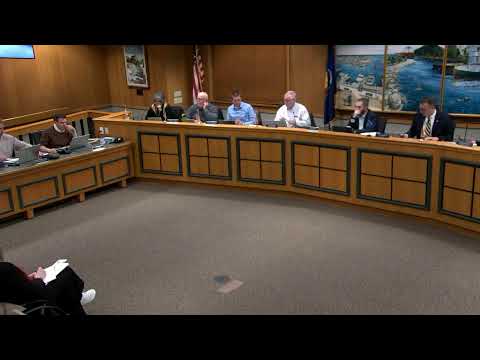
The Port Washington Common Council on April 15 adopted an ordinance creating a new I-3 Technology Campus zoning district to allow and regulate possible data-center or large technology campus development, after a public hearing that filled council chambers and drew dozens of speakers opposed to the idea.
The ordinance — listed in the meeting packet as ordinance 2025‑O6 — establishes baseline standards for site design, screening, lighting and sound for large technology uses. Planning staff and outside consultants told the council the code sets guardrails for any future proposal; council members said detailed mitigation would be negotiated later in a developer agreement or at the site‑plan stage.
At Tuesday’s hearing, planning consultant Mr. Harris told the council the new district was crafted because “our existing zoning code simply was not capable of effectively addressing the project as it was taking shape.” Harris said the draft code requires full cutoff fixtures at a maximum color temperature of 3,000 Kelvin, landscape berms and tree replanting using native species, and specifies a maximum base building height of 65 feet (with a theoretical 100‑foot cap in limited circumstances in the text). The draft sets a minimum sound standard of 70 decibels at the property line as written in the ordinance text.
The hearing drew extensive public comment. Dozens of residents asked the city to halt or tighten the proposal or to require more study before altering the zoning code. Deborah Lascella, a Port Washington resident, said the community needs wider public input and risk assessment: “I would propose a referendum and also a very comprehensive risk assessment with public input and feedback,” she told the council. Susan Walteter, who said she lives about a half‑mile from the proposed site, warned of scale and long‑term impacts: “This data center on 2,000 acres will be 80 time or 8 times the size of the largest existing telecom center in the world,” she said in her remarks.
Several speakers raised environmental and wildlife concerns. Kim Pemble, who identified herself as working in healthcare IT and informatics and living near the proposed site, told council members the proposed sound level is harmful to birds: “70 decibels is 10 decibels too high for birds that are in migration,” she said, adding that lights and constant noise can disrupt breeding and migratory behavior. Joyce Gentges, representing the Northern Cross Science Foundation and the observatory at Harrington Beach State Park, said increased lighting would force the observatory to relocate and harm stargazing programs she said have helped local youth.
Other public comments pressed questions about water use, power infrastructure and the length of construction. Several speakers asked what local approvals would follow zoning — and whether any state permits or utilities approvals were in hand — and reminded the council that zoning alone does not authorize water or power permits.
Attorney Sam Schultz, representing the city’s consultants, described the new district as a set of “wide guardrails” that the city can refine in later development‑agreement negotiations. He and planning staff emphasized that the zoning code sets baseline requirements but that the council would see more specific site plans and negotiable developer agreement terms if a company sought to build.
Alderman Benning moved adoption of the ordinance; a second was recorded and the council adopted ordinance 2025‑O6 by voice vote. No individual roll‑call tally was recorded in the meeting minutes; the mayor announced, “Opposed? Motion carries.”
While the new I‑3 district places more stringent screening and lighting standards than some local codes, the council and planning staff stressed it is the first step in a multi‑stage process. If a developer seeks to build, the city would negotiate a developer’s agreement and review site plans, permitting, environmental reviews and any required state approvals. The zoning change does not itself permit construction or utility hookups.
Council members and staff told the public the ordinance was the product of three public meetings: planning commission review, a prior council review and the hearing held April 15. Several council members asked staff to publish an FAQ explaining the steps between zoning adoption and any future site development, and staff agreed to prepare that material.
Next steps: the I‑3 district is now part of the municipal code; any future project that uses that district will require a separate site‑level review, potential developer agreement negotiations and any applicable state or utility permits.