Get Full Government Meeting Transcripts, Videos, & Alerts Forever!
Get email alerts on the Lot Split Variance topic
No spam. Unsubscribe anytime.
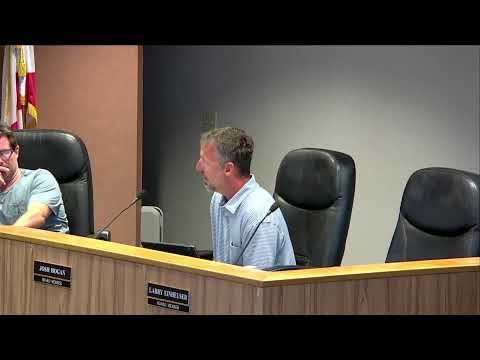
Planning board denies lot-split variance at 8 Thirteenth Street, member recuses
Summary
The Planning and Zoning Board denied a variance that would have allowed a legally nonconforming lot at 8 Thirteenth Street to be split into two parcels smaller than the medium-density minimum; a board member recused for a family relationship.
The Planning and Zoning Board on April 15 voted to deny a variance request that would have allowed a property at 8 Thirteenth Street to be split into two lots smaller than the 4,100-square-foot minimum required in the city’s medium-density residential zoning. A board member recused himself before the vote because of a family relationship.
Staff said the property currently totals roughly 7,581 square feet after a portion was sold in December 2024. Staff noted that had the lot remained at its original size of 8,370 square feet, each new lot would have been about 4,185 square feet and could have been split without a variance. The applicants instead requested relief to split the parcel into two lots of about 3,900 square feet each.
Ed Carr, representing the property owner and trust, described negotiations that led to the smaller parcel: “We're dealing with 7,581 square feet ... We're asking for 619 square feet variance on 2 lots, or approximately 3 10 feet on each 4,100 square foot required square footage lot.” He said the family had held the large lot since the 1950s and that the parcel’s irregular shape reflected historical platting and a former trolley alignment.
Property owner Nick Xnidius said the lot was part of a family inheritance and framed the prior boundary work as an effort to resolve a neighbor dispute rather than to gain an advantage: “This was a property my dad acquired for us. This is our inheritance. ... We just wanted to do, what was right.”
Neighbor Austin Costin, who described reaching a settlement with the owners years earlier, urged denial and characterized the hardship as created by the parties’ subsequent decisions: “It’s an invention by somebody who now wants to get a subdivision to split the law.”
Board members questioned whether the shortfall in lot area resulted from a recent, voluntary sale that created the need for a variance and raised concerns about setting a precedent that would allow other property owners to split lots below the minimum. Board member Sarris stated on the record that he would recuse himself because of a family relationship with the applicant. The board voted to deny the variance; the motion cited the hardship as self-created.
The denial means the applicant may pursue other civil solutions — for example, negotiating to buy back the sliver sold in 2024 — or submit a different proposal, but it does not authorize a subdivision of the property as proposed. Any future application to split the lot would require compliance with the city’s land development regulations or a new variance request.