Get Full Government Meeting Transcripts, Videos, & Alerts Forever!
Get email alerts on the Affordable Housing Development topic
No spam. Unsubscribe anytime.
Committee approves major variations for 30-unit development at 2206 Maple Avenue; members request clarity on tax-increment incentive
Summary
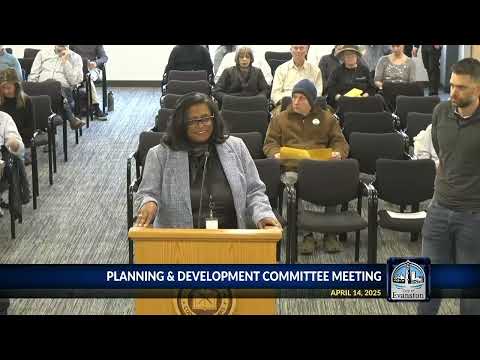
The Planning and Development Committee approved major variations to allow a five-story, 30-unit apartment building at 2206 Maple Avenue and debated the fiscal impact of a Cook County incentive (referred to in the transcript as HB 2,621) for affordable units.
The Planning and Development Committee voted to approve ordinance 35,025, granting major variations to permit construction of a five-story, 30-unit multifamily building with 29 on-site parking spaces at 2206 Maple Avenue.
Council member Burns moved the motion and Council member Ravel seconded. The substantive discussion focused on the developer’s inclusion of 20% on-site affordable units and the financial trade-offs of a Cook County incentive referenced in the transcript as “HB 2,621.” Council member Kelly asked staff for a fuller presentation on the program’s tiers and the local fiscal impact, saying she wanted the committee to “be informed about HB 02/1980 [HB 2,621] … and the financial implications, in terms of tax dollars.”
Paul (identified in the transcript as a staff member) presented a summary sheet the committee had received and said, “It cost the city shy of $15,000 on average per year for 30 years,” referring to expected foregone property tax revenue under a 20% inclusionary housing scenario at higher-relief tiers. He added that the total city loss on that model would be about $450,000 over 30 years, while the developer’s modeled total property-tax savings was larger when county incentives were applied.
Members asked for a clearer breakdown of tier options, length of relief and city versus school-district revenue impacts. Council member Kelly requested a staff presentation on the three tiers of the county program before final council action so the body could assess whether tier 1, tier 2 or tier 3 made sense for Evanston on larger future projects. The committee approved the variations; Council member Kelly requested staff follow up with a more detailed fiscal presentation when the item returns to the council.