Muskogee council adopts Scissor Tail data center plan, approves related Port and county agreements
Loading...
Summary
After a public hearing with mixed public comment, the City of Muskogee adopted ordinance 42-58(a) approving the Scissor Tail data center project plan, declared an emergency to enact the ordinance immediately, and approved related economic development agreements with the Port Authority and Muskogee County.
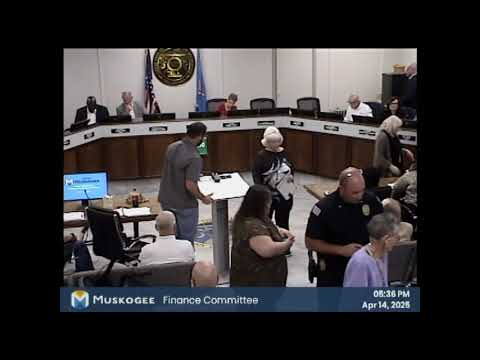
The City of Muskogee on April 14 adopted the Scissor Tail data center economic development project plan and related tax incentive agreements, following a public hearing and unanimous council votes to approve the ordinance and to declare an emergency that makes the ordinance effective immediately.
At the hearing, Dan Bachelor, an attorney with the Center for Economic Development Law, told the council the plan is intended to attract large data-center investment. Bachelor said, “if approved, this project plan and the related agreements will stimulate the development of at least 1 and perhaps several more data centers, each requiring an investment of approximately $1,000,000,000.” He described projected revenue streams for taxing jurisdictions and franchise fees the city would receive under the partnership agreement among the city, Muskogee County and the Port of Muskogee.
The plan and accompanying tax agreements were presented to the council after review by a statutorily created review committee and the city planning commission, which Bachelor said recommended the project unanimously. The ordinance on the agenda (42-58(a)) includes a tax-incentive structure and a community investment component that would provide payments in lieu of ad valorem taxes and shared franchise-fee revenues to participating public entities.
Several residents spoke during the public comment portion. Mark Hughes, who identified himself as a local resident, said he generally supports business but criticized the council’s handling of some previous projects and said he opposed Scissor Tail on that basis. “I have no problem with business company in Muskogee. But I have a problem with how the city council, reacts to it,” Hughes said. Mike Gregg raised questions about the fiscal and resource impacts, asking for comparisons between the proposed incentives and what the city would receive under a normal ad valorem tax regime and querying anticipated water and energy consumption. Gregg said the 1% consumer-price-index adjustment in the agreement “is totally ludicrous” and urged fuller study of long-term costs and resource impacts.
Others told the council they supported the project. Tracy McGee, speaking for herself, described the community investment plan as an opportunity to secure funds for local priorities and urged clear clawback language to protect the city if the company failed to perform. Reverend Andre Jones, speaking for the CMU clergy group, urged the council to prioritize local community facilities such as the Martin Luther King Center during broader CIP planning discussions.
Councilors asked questions and heard additional details from Bachelor about payments in lieu and the agreements’ CPI adjustments. Bachelor said the payment levels for each phase would be adjusted from the date each phase is placed in service and that the agreements include clawbacks if the company fails to perform. He also said the proposal would generate revenues to the school district that would be “unrestricted” and likely larger than the district’s ad valorem share for comparable development.
Councilors then voted first to approve adoption of ordinance 42-58(a) as amended to correct exhibit numbering, and later voted to declare an emergency so the ordinance takes immediate effect. The council also approved two related agreements on the council agenda: an economic development agreement between the City of Muskogee and the Muskogee City-County Port Authority and an economic development agreement between the city and the Board of County Commissioners of Muskogee County; both votes passed unanimously.
The project plan and agreements invoke state statute as part of the public-hearing process; the staff presentation cited “state statute 62 8 59” on the agenda packet. City leaders said the agreements are intended to create a long-term public partnership to capture new revenue streams and to fund community projects, economic development and infrastructure improvements. Mayor Patrick Kale and council members framed the measures as an opportunity to attract investment that, proponents said, would be difficult to replicate through other forms of development.
The council’s votes on the ordinance, the emergency declaration, and the related Port and county agreements were unanimous. The project will proceed to implementation steps outlined in the ordinance and the associated incentive and partnership agreements between the public entities and the private developer.