Get Full Government Meeting Transcripts, Videos, & Alerts Forever!
Get email alerts on the Education Budget topic
No spam. Unsubscribe anytime.
Brookline schools present $8.4 million gap for FY26 as town, committee debate short-term options
Summary
School officials presented a $149.99 million FY26 operating request on April 15 that leaves a remaining gap of $1.0–2.3 million after committee cuts; Select Board and town leaders discussed bridge funding, the timing of layoffs, and a need for clearer budget detail on staffing and ‘level‑service’ costs.
The Brookline School Department told the Select Board on April 15 that its original FY26 budget request of $149.99 million leaves a remaining gap of $1,000,716 after the school committee’s recent reductions and some revenue adjustments. Superintendent and finance staff said the full, originally proposed budget rose about $13 million year over year, driven largely by step/column increases, added mandated special‑education costs and out‑of‑district tuition, and grants that expired and had to be absorbed into the operating budget.
The department’s presentation, delivered by School Business Administrator Susan Givens and temporarily by Dr. Guillory, laid out key drivers: salary increases and step/column plus cost‑of‑living adjustments (about $5.3 million), additional staff and restored positions tied to student needs and programs ($1.9 million in new-position requests in the initial proposal), and recurring non‑salary increases largely driven by special‑education tuition and transportation ($3.6 million). Givens told the board that 85 percent of the school budget is salary‑related.
Town and school officials emphasized the continuing mismatch between expenses and available revenue. The Town School Partnership has updated revenue forecasts and closed part of the gap since the budget was first presented, but the select board and advisory committee urged the schools to provide clearer, line‑by‑line “level service” accounting and a district‑wide headcount of full‑time equivalent teachers and staff so elected officials and advisory groups can judge tradeoffs.
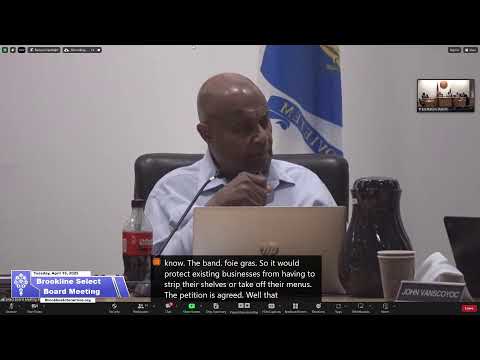
“We need a number for how many full‑time teacher equivalents are in this budget,” Select Board member John Doggett said. Doggett and others pressed for a short summary that shows how many positions the operating request funds district‑wide. Givens said those tallies are in the budget book’s position tables but that the district also submits different counts to the Massachusetts Department of Elementary and Secondary Education (DESE) that use different reporting conventions; she agreed to provide a consolidated teacher FTE number on short notice.
Town leaders discussed short‑term options to avoid mass layoffs while the longer fiscal questions are resolved. Select Board members and the town administrator raised the possibility of one‑time “bridge” funding from capital or reserve sources to prevent immediate personnel actions before voters can consider any ballot remedy. Several select board members warned that using one‑time money to fund recurring operating costs only delays the structural problem. “To take one‑time gifts to fund recurring costs is continuing to dig the hole,” one member said.
The schools said some options had already been taken: the school committee trimmed $6.34 million from the original gap through salary and nonsalary reductions and identified $422,794 in revenue enhancements. Remaining choices carry significant tradeoffs. The committee has also discussed procedural deadlines: under collective‑bargaining timetables the district must notify certain staff by May 1 or May 15 depending on status, giving a narrow window to resolve the remaining shortfall without issuing nonrenewal notices.
Select Board members asked the schools for two immediate deliverables: (1) a district “level‑service” budget that shows what FY26 would cost to continue current services without program expansions, and (2) a summarized, column‑by‑column headcount showing teacher and core staff FTEs so elected officials and advisory can compare staffing levels year to year. The board also asked the schools to quantify what one‑time reserves, capital reallocations or other stop‑gap measures would buy in months of runway.
The School Department said it would continue to refine its reductions and that the school committee would finish deliberations before the May 1 personnel notice deadlines. Town and school officials agreed to continue collaborative discussions through the Town School Partnership and the Finance and Advisory Committee to present clearer options for advisory and the Select Board in coming meetings.
At the end of the session School officials reiterated the central constraints: rising special‑education costs, mandated services previously funded by grants, and contract‑driven salary increases. Board members warned that any short‑term stop‑gap cover would have to be followed by a longer policy solution, and that decisions to cut building maintenance or staff to close the gap would carry long‑term costs that the town should weigh carefully.