Get Full Government Meeting Transcripts, Videos, & Alerts Forever!
Get email alerts on the Victim Services topic
No spam. Unsubscribe anytime.
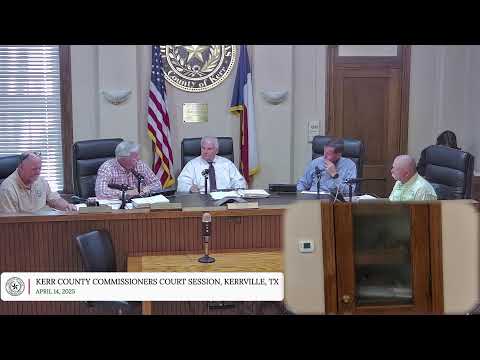
Kerr County court to ask Bandera and Gillespie to share victim services costs using prior-year case counts
Summary
Kerr County directed staff to pursue cost‑sharing with neighboring counties for the victim services department, asking that initial requests be based on last year’s case counts and that the arrangement be tried for one year while an interlocal agreement is drafted.
Kerr County Commissioners Court heard a proposal and approved a plan to ask Bandera and Gillespie counties to contribute toward the county’s Victim Services budget, with the initial request based on prior‑year case counts.
Why it mattered: Kerr County staff said the victim services program—historically supported by grant funding—now faces reduced grant coverage and the county is carrying more of the cost. The program serves residents across neighboring counties, prompting discussion of how to equitably divide operating costs.
What was proposed: County staff presented three allocation options: a heads-served split, a population-based split, and a pro‑rata split tied to case counts. The county engineer and some commissioners favored allocation tied to actual usage (case counts) rather than decennial population figures, which they said can be misleading for multi-county service demands.
Court action: The court moved, seconded and voted unanimously to take a one‑year approach: staff will request contributions from Bandera and Gillespie based on last year’s actual case counts, then return to the court with follow-up. Court members asked staff to pursue an interlocal agreement (ILA) or similar formal arrangement with the other counties and to coordinate through designated liaisons.
Clarifying details: The transcript shows the county’s spreadsheet comparing splits (25/20/55 and population‑based allocations were among the options). Staff cautioned that if the court chose a heads‑served approach based on current-year counts, the receiving county would be billed in arrears because final counts would not be available until after the fiscal year. That was a key reason the court directed staff to base the initial ask on last year’s numbers.
Next steps: Staff will approach Bandera and Gillespie with the historical-case‑count request and work with the county attorney and judges/liaisons from those counties to draft an ILA. The court asked for monthly or quarterly reporting of case counts while discussions continue.
Ending: Commissioners said they want a fair, data‑driven allocation, noting prior informal contributions from Bandera, and asked staff to return with recommended language for an ILA and proposed billing mechanism.