Get Full Government Meeting Transcripts, Videos, & Alerts Forever!
Get email alerts on the English Language Learners topic
No spam. Unsubscribe anytime.
Norfolk Public Schools outlines English learner services, staffing and enrollment
Summary
District ELL staff told the board the program serves roughly 340 students speaking 17 languages across elementary, middle and high school; staff described classroom strategies, newcomer supports and staffing needs.
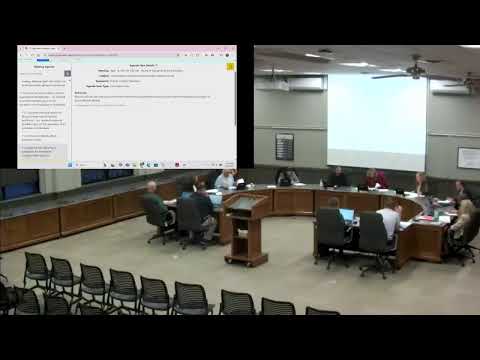
Norfolk Public Schools staff presented an English language learner (ELL) program update to the Board of Education, reporting program size, classroom approaches and staffing needs across the district.
"Every day, we have the privilege of working with 340 NPS students who speak 17 different languages," said Beth Shaner of the district ELL team. Staff described differentiated instruction (sentence stems, vocabulary supports, phonics and phonemic awareness), newcomer language units and hands-on activities used across grade levels to build English proficiency and access to grade-level content.
Presenters from multiple schools described local ELL populations and classroom practices: Grant Elementary’s Shaner said first graders work on phonics and past-tense forms; Bel Air and middle-school teachers described activities to build phonemic awareness and vocabulary; Jefferson Elementary’s ELL teacher said 26 ELL students receive newcomer units and math/writing support; Washington Elementary reported 53 ELL students with hands-on vocabulary instruction; Woodland Park reported 12 ELL students and use of student notebooks to preserve language learning; the junior high reported 37 ELL students and in-class para support; and the high school reported 92 ELL students with three teachers and multiple supported classes.
Brandy Zavodil, junior-high ELL teacher, thanked the board for approving an additional part-time teacher next year and said new-to-country students spend focused time in ELL class to build background knowledge before accessing grade-level science, social studies and math classes. "Everybody has access to grade level content and so they are in the same science, social studies, math and electives with their English-speaking peers," Zavodil told the board.
District staff said they use programs and practices such as newcomer units, sentence stems, phonics instruction, vocabulary-focused activities, and some technology (teachers cited Kahoot) to reinforce learning. The district reported plans to request grant funding to purchase Lexia PowerUp (a tier 2 reading intervention) for junior and senior high if grant funds are available; the board was told a purchase would be brought to the full board if grant funding is not obtained.
Staff noted staffing challenges and recruitment: the human resources report said the district has several unfilled special education positions (seven or eight) and one open Spanish teacher position at the high school. Presenters said the district is using full- and part-time teachers plus paraeducators to provide ELL services and sometimes relies on contracts and alternative certification to fill positions.
No formal board action was taken on the ELL presentation itself; it was an informational update included on the agenda.