Get Full Government Meeting Transcripts, Videos, & Alerts Forever!
Get email alerts on the Traffic Safety topic
No spam. Unsubscribe anytime.
Spokane leaders announce traffic-safety package including new traffic unit, no-turn-on-red signs and a 12-month fatality review
Summary
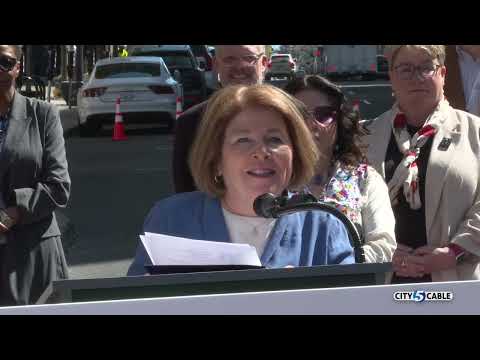
Mayor Lisa Brown and city council leaders announced a package of traffic-safety measures Tuesday aimed at reducing serious and fatal crashes in Spokane, including creation of a dedicated police traffic safety and education unit, downtown no-turn-on-red signage, a 12-month traffic fatality review pilot and expanded automated enforcement.
Mayor Lisa Brown and city council leaders announced a package of traffic-safety measures Tuesday aimed at reducing serious and fatal crashes in Spokane, including creation of a dedicated police traffic safety and education unit, downtown no-turn-on-red signage, a 12-month traffic fatality review pilot and expanded automated enforcement.
Brown told attendees that Spokane had seen a rise in serious crashes and fatalities in recent years: "In 2019, there were 10 fatalities and 63 serious injury crashes," she said, adding that "in 2024, we had 20 fatalities and a hundred and 2 serious injury crashes" and that the city had already recorded six fatalities so far this year, including two pedestrians.
The new measures bring together police enforcement, traffic engineering and community programs. "Traffic safety is public safety," said Chief Hall, announcing that Spokane Police Department will reinstitute a traffic safety and education unit whose primary responsibility will be traffic enforcement and public education. "You will see motor officers out there... Their full time job is to be out there and enforce traffic law and provide education for our motorists," Hall said. He said positions for the unit will be filled on the 28th and the unit will begin work the following week. Hall said the initial staffing will include four motor officers, two DUI officers and an accident reconstructionist; a dedicated supervisor is being arranged.
Council President Betsy Wilkerson framed the effort as a coordinated city response: "Spokane is in full motion today of how we are addressing traffic safety," she said, and praised the partnership between the mayor's office and council. Council Member Sappho said the change followed years of council discussion and passed resolutions and singled out two specific program elements: downtown no-turn-on-red signage in high-pedestrian areas and a neighborhood block-party/play-streets program to let residents temporarily close nonarterial streets for community events.
On no-turn-on-red, city staff said the change does not require a city ordinance but that they will work with the council so the public can weigh in. City staff demonstrated signage for downtown Maine Avenue and said downtown corridors and other high-pedestrian areas will be prioritized for the restriction; the prohibition will be enforced by Spokane Police Department.
City planners and police also described other pieces of the package: pilot expansion of automated traffic cameras (red light and speed) where infrastructure and court procedures allow; two new camera locations already identified at Mission and Green with additional school zones and intersections under consideration; and a 12-month traffic fatality review team that will analyze environmental, vehicle and behavioral factors in fatal crashes.
Neighborhood leaders welcomed the announcements. "A resounding finally," said Pia Hallenberg of the downtown neighborhood council, describing repeated concerns about intersections in the area and saying neighborhood councils appreciate the focus.
Staff also said initial bike infrastructure work will continue: bike lockers have been installed outside City Hall but are currently reserved for city employees; future lockers in the rollout will be available to the public. Officials said deployment of traffic unit officers and automated camera locations will be guided by cleaned and analyzed crash data and an equity analysis required by a recently enacted state law addressing automated enforcement siting.
What leaders described as next steps include filling the traffic unit positions on the 28th, completing the equity analysis for camera siting and beginning the 12-month pilot for the fatality review team. City staff said they will coordinate further details with council and solicit public input on some elements of the package.
Officials emphasized the initiatives are intended to reduce speeding, distracted driving and other hazardous behaviors. "Speeding is the most common behavior," Hall said, and he said the unit will also focus on distracted driving and enforcement of traffic-control devices. He also said the department plans to expand automated enforcement "as the infrastructure is built through courts and other city departments to allow us to do so."