Get Full Government Meeting Transcripts, Videos, & Alerts Forever!
Get email alerts on the Land Use topic
No spam. Unsubscribe anytime.
Housing‑appeals hearing turns on whether local nitrogen risk justifies costly septic condition in Hingham 40B case
Summary
The Town of Hingham’s zoning board and a developer clashed at oral argument over whether a local condition requiring an advanced septic system to treat excess nitrogen was justified by evidence that onsite nitrogen would reach neighboring potable wells; the appeals committee found only a possibility of contamination and struck the condition.
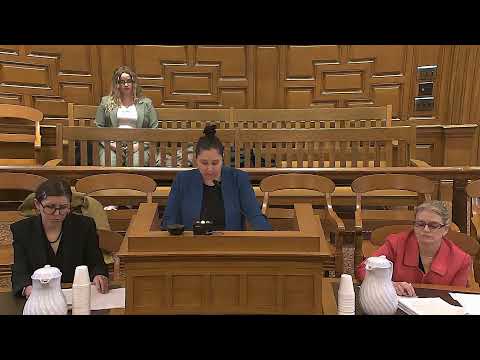
The Appeals Court heard arguments in a de novo review of a Housing Appeals Committee decision in a Chapter 40B matter where the Town of Hingham’s Zoning Board of Appeals imposed a condition requiring an advanced septic system to treat excess nitrogen. The appeals committee removed that condition; the town asked the court to reinstate it.
Counsel for Hingham told the panel the town made a legitimate public‑health showing that excess nitrogen from the proposed development could contaminate neighboring private wells and a productive aquifer, creating risks to infants and other sensitive populations. The ZBA introduced expert testimony and argued the advanced treatment condition was directly related to the local health concern and therefore could outweigh the regional need for low‑ and moderate‑income housing under the Reynolds/40B balancing framework.
Developer counsel argued the Housing Appeals Committee reasonably found the town’s evidence inadequate to prove groundwater would flow from the project to the wells. The developer presented its own expert findings about soil, bedrock depth and groundwater flow, and contended the committee’s credibility determinations and weighing of housing need against local concerns were supported by substantial evidence.
Justices questioned whether the record contained basic factual information—well depths, presence of sanitary seals, and site‑specific well logs—that would materially affect groundwater flow analysis. Counsel acknowledged some facts were not in the hearing record; town counsel said certain records might exist at local boards but were not in evidence. The panel pressed both sides on burdens: the developer’s initial obligation to prove state compliance and the ZBA’s obligation, at appeal, to show a local concern that outweighs housing need.
The case was submitted for decision.