Get Full Government Meeting Transcripts, Videos, & Alerts Forever!
Get email alerts on the Criminal Procedure topic
No spam. Unsubscribe anytime.
Appeals court considers whether officers needed probable cause or reasonable suspicion to send man to hospital under drug‑rehab law
Summary
Counsel disputed whether Massachusetts’s drug‑rehabilitation protective‑custody statute requires probable cause (as under the older alcohol statute) or only reasonable suspicion to place someone in an ambulance for hospital evaluation; testimony and precedent including O'Brien, Alfano and McCaffrey were argued.
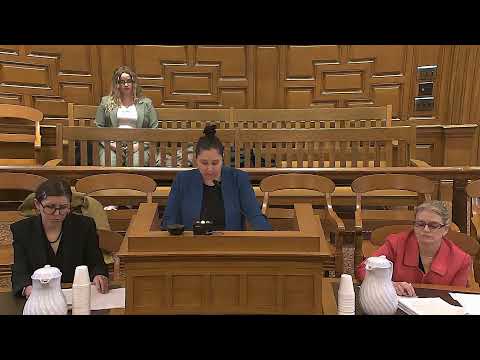
In Commonwealth v. Verrier, the Appeals Court heard competing legal views about the standard police must meet to place a person into protective custody under Massachusetts’s drug‑rehabilitation statute (commonly cited as Chapter 111E). Defense counsel argued the statutory protective‑custody power requires probable cause—relying on SJC precedent construing the older alcohol statute—while the Commonwealth urged a lower reasonable‑suspicion standard when the officer’s objective is to send the person to a hospital for medical evaluation.
Defense attorney Anne O’Reilly told the panel that the facts found at the suppression hearing—swaying, buckling knees, pinpoint pupils, a statement that the person had overdosed days earlier and evidence of recent fentanyl exposure—did not add up to probable cause under controlling precedents and that the trial judge applied the wrong legal standard. O’Reilly cited First Circuit decisions (Alfano v. Lynch) and argued the community‑caretaking and protective‑custody frameworks required careful constitutional scrutiny.
Assistant District Attorney Brynn Morse, representing the Commonwealth, argued the drug‑rehabilitation statute authorizes an ambulance transport and that the statute’s purpose and intrusion level (transport to get medical care) support measuring the seizure by reasonable suspicion, not the probable‑cause rule used when an arrestee is placed in a police cell. Morse told the court officers are trained to recognize opioid signs and that when a person exhibits indicators suggesting they may not be in full control, an officer may properly arrange emergency care.
The justices pressed both sides about the Fourth Amendment dimensions: whether the intrusion of locking someone in an ambulance and taking them to a hospital is materially different from other temporary seizures; what the proper moment of seizure is (consent withdrawal vs. initial contact); and whether the statutory text and O’Brien precedent compel probable cause for all protective‑custody removals. The case was submitted for decision.