Get Full Government Meeting Transcripts, Videos, & Alerts Forever!
Get email alerts on the Criminal Justice topic
No spam. Unsubscribe anytime.
Appeals court hears challenge to assault-on-officer conviction over whether defendant knew men were police
Summary
Attorneys in Commonwealth v. Maddox disputed whether evidence showed Jonathan Maddox knew he was confronting police officers and whether officers were acting under the color of authority; defense urged insufficiency, Commonwealth argued testimony supported a jury finding of knowledge.
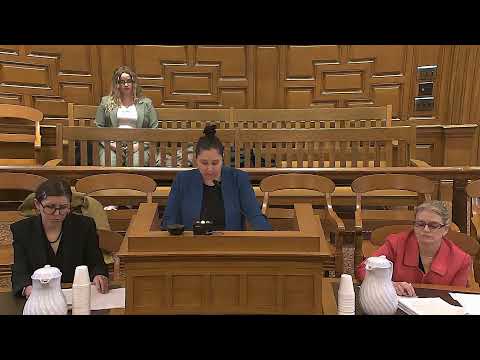
The Massachusetts Appeals Court heard oral argument in Commonwealth v. Maddox about whether the evidence was sufficient to support a conviction for assault and battery on a police officer and whether the officers were acting under the color of their authority.
The defense told the three-justice panel that, even accepting the Commonwealth’s evidence, the record did not show that Jonathan Maddox knew he was interacting with police when his arm touched an officer’s neck. Defense counsel said the chaotic scene—“tens of thousands of people coming out of a concert,” in counsel’s words—supports the claim Maddox believed he was being robbed and responded as someone trying to protect property. The lawyer argued the jury twice deadlocked and asked for additional definition of what it means for officers to act under the color of authority.
The Commonwealth countered that both officers involved announced themselves and showed badges during the encounter. Michael Thomasini, arguing for the Commonwealth, pointed to testimony that Officer Morgan removed a badge from a lanyard and that Officer Wadi Niles lifted his shirt “at least three times” to display a badge, and told the court those facts allowed a jury to infer the defendant appreciated they were police. Thomasini urged the court to draw reasonable inferences in the Commonwealth’s favor under the Lattimore standard for sufficiency review.
Defense counsel also pressed that the officers were enforcing an expired injunction and that, under certain precedents, officers executing an expired legal authority may not be acting under the color of their office—an argument the defense tied to Fourth Amendment suppression and attenuation doctrines. The defense cited the court’s prior decisions (including Doyle and related decisions) and asked the panel to consider whether the officers verified the validity of the injunction they claimed to be enforcing.
Both sides acknowledged the case involved close questions of fact that a jury resolved: whether Maddox subjectively knew he was dealing with police and whether the officers’ conduct was within the scope of their official duties. The court’s justices questioned both counsel about inferences from on-scene statements and about the role intoxication can play in a defendant’s perception.
The case was submitted after argument; the panel did not announce a ruling from the bench.
Why it matters: A ruling could clarify how appellate courts apply the sufficiency standard when the defendant’s subjective knowledge is contested and how expired authority or crowd-control details affect the “acting under color of authority” element in assault-on-an-officer prosecutions.