Get Full Government Meeting Transcripts, Videos, & Alerts Forever!
Get email alerts on the Dockless Vehicles topic
No spam. Unsubscribe anytime.
Cheyenne council approves amended dockless-vehicle rules, adds timeliness language to RFP requirements
Summary
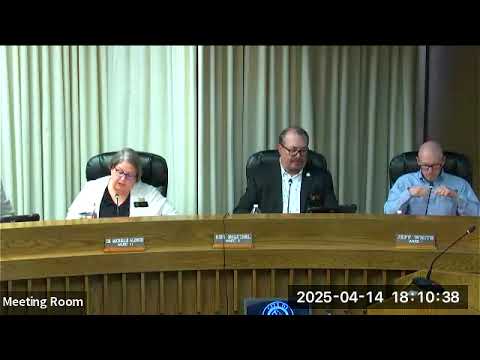
The Cheyenne City Council on April 14 approved changes to chapter 10.82 allowing dockless scooters and similar vehicles to operate under the city's procurement process, adopting an amendment that requires proposers to describe how they will respond "in a timely manner" to operational and maintenance issues.
The Cheyenne City Council on April 14 approved an ordinance amending chapter 10.82 of the municipal code to authorize dockless vehicle companies to operate in the city through the city's formal procurement (RFP) process. The council adopted an amendment adding the phrase "in a timely manner" to the operations and maintenance plan requirement for proposers.
Why it matters: the ordinance rewrites how the city licenses dockless motorized scooters, electric bicycles and GPS-equipped bikes. It sets procurement and evaluation rules for companies that want to place dockless vehicles in Cheyenne, and drew extensive discussion about how specific the city should be in requiring response times, safety measures, data sharing and community engagement from vendors.
Council discussion focused on two themes: how prescriptive the RFP should be about vendor response and operations, and how much flexibility the administration should keep when drafting future RFPs. Councilmember Dr. Aldridge argued the RFP should stress responsiveness so scooters do not "lay around town or [be] broken and dysfunctional for long periods of time," and moved to add explicit timeliness language to the operations and maintenance plan. Dr. Rennie said "in a timely manner" felt vague and preferred a specific deadline. City Attorney John Brody responded that enforcement and specific response expectations would be incorporated by the procurement department when it prepares the RFP: "I think that would just come down to the discretion of the procurement department within the city." Purchasing Manager TJ Bartlebort told the council the RFP could treat proposers' stated response times as scoring criteria: "we can either mandate that we want a set amount of time for a response or we can let the proposers tell us what their intended response time is and we can use that as a scoring criteria."
Several proposed amendments failed. A motion to remove language allowing "any other requirement deemed appropriate by the mayor or his or her designee" from two sections of the draft ordinance failed after five council members recorded opposition. A separate proposal to delete several items the city would ask proposers to address (safety and rider education, data‑sharing/reporting capabilities, community engagement strategies and reduced‑rate programs) failed; that vote was recorded with Councilmember Moody as the lone yes. An amendment to change a provision that would allow the city to "select one or more" operators to instead permit the city to select "any operators" also failed, with Moody recorded as the sole yes vote.
The motion to approve the ordinance on second reading was moved by Councilmember Layborn and seconded by Councilmember White. The ordinance passed on second reading; Layborn and Moody were recorded as voting no. The amended ordinance requires vendors, as part of their RFP submissions, to include operations and maintenance plans that describe how they will respond "in a timely manner," and leaves procurement‑level enforcement and scoring details to city staff as part of the RFP development process. City staff told councilmembers they expect to issue RFPs annually while the program is being established.
Next steps: the ordinance now exists on the city's legislative track after passing second reading and will follow the council's normal subsequent steps for final adoption and implementation through the city procurement process. The RFP will specify how the city scores timeliness and other operational commitments.