Get Full Government Meeting Transcripts, Videos, & Alerts Forever!
Get email alerts on the Charter Review Cwicc topic
No spam. Unsubscribe anytime.
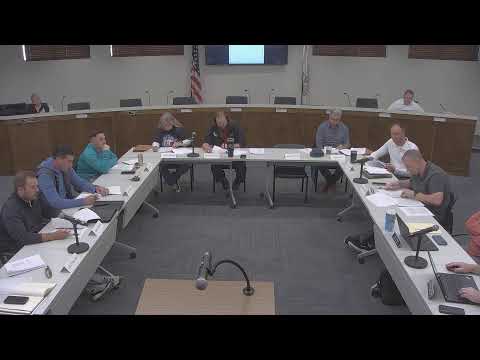
Commission declines strict CWICC property limits in charter, agrees to finalize red-line draft for May review
Summary
The Canal Winchester Charter Review Commission on April 16 debated whether to add binding limits on city property holdings and whether those limits should apply to the Canal Winchester Community Improvement Corporation; the commission declined to impose prescriptive CWICC rules in the charter and directed staff to circulate a finalized clean red-line for early May review.
The Canal Winchester Charter Review Commission on April 16 debated whether to add a charter provision limiting city authority to acquire and hold property for private development and whether those limits should apply to the Canal Winchester Community Improvement Corporation (CWICC). Commissioners generally opposed adding binding rules for CWICC in the charter and agreed to produce a finalized clean red-line charter draft for review at their next meeting in early May.
A proposed draft clause circulated during the meeting would have allowed city council to acquire and lease property for the purpose of promoting private development only if each acquisition included a disposition plan targeting transfer to private ownership within seven years; continued ownership beyond seven years would require a two-thirds vote, and the total city-held property under that authority would be capped at eight parcels. Several commissioners questioned whether such a provision could or should apply to CWICC, which is a separate legal entity.
Commissioners and participants pointed to CWICC’s recent activity — façade grants, property acquisitions, and industrial-park parcel transfers — as evidence that the organization conducts development functions the city also supports. Some members argued that because CWICC is not a direct city department and has its own rules, the charter should not impose prescriptive rules on that independent entity. One commissioner said the city should keep a high-level guideline in the charter — that properties bought for private development should be intended to return to private ownership — rather than a binding numerical cap or short disposition period.
Multiple speakers also warned that a seven-year disposition target may be too short for complex development projects. One participant with development experience observed that infrastructure planning and funding can take a decade or more, and that 10–15 years is sometimes needed to complete deals and prepare property for private transfer.
On procedural next steps, the commission asked staff to prepare two deliverables: (1) a one-page spreadsheet aligning proposed changes with proposed language and (2) a single clean red-line version of the charter that incorporates the commission’s edits. Commissioners agreed to circulate those documents in the coming days and to review the finalized red-line at the next scheduled meeting in early May. The commission did not adopt the proposed seven-year/disposition-cap language and did not change CWICC’s governance structure during the meeting.
Votes at a glance
- Motion to amend the agenda (flip items so business precedes red-line review): approved; motion made by the chair, seconded by Ms. Booms. - Motion to approve charter review minutes from April 2, 2025: approved; motion made by Mr. Vasile, seconded by Mr. Conner. - Motion to excuse Mr. McBreer from the meeting: approved; mover identified in the record as Mr. Steelston, second not clearly identified on the transcript. - Motion to adjourn: approved; motion made by Mr. Conner, seconded by Mr. Karsher.
None of the recorded votes changed charter text at this meeting; the commission’s direction was to prepare and circulate the red-line and related summary spreadsheet for a final review at the next meeting.